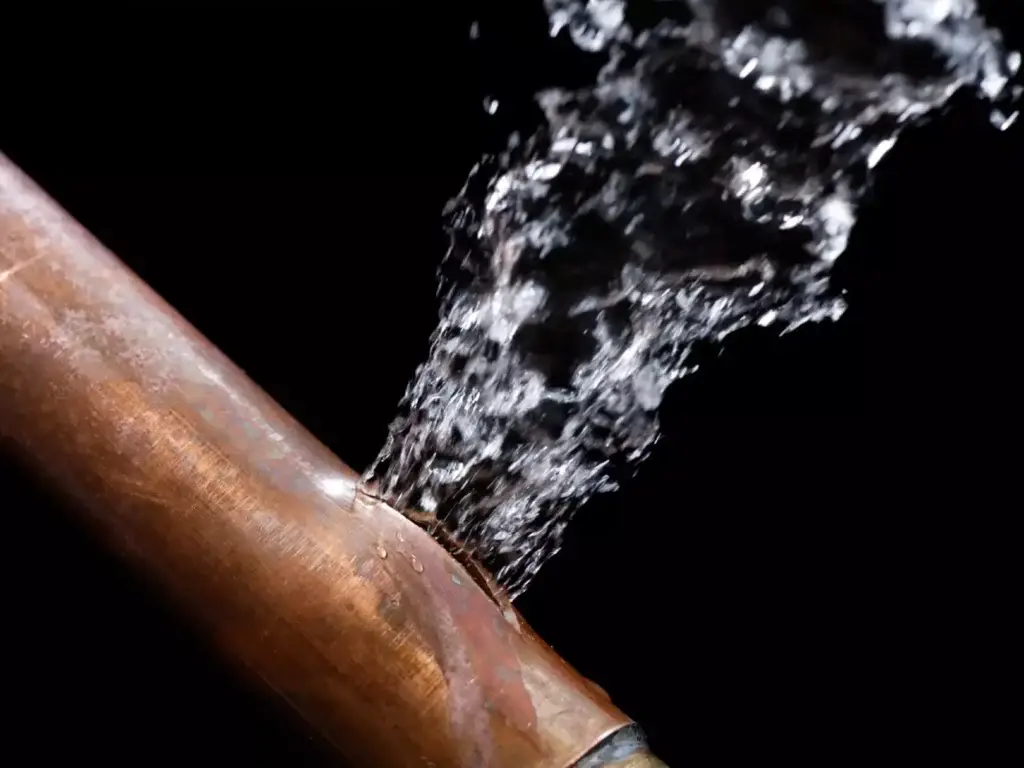
Water damage is measured in minutes, not hours. The exact sequence to follow from the moment you hear water where it shouldn’t be.
A mains-pressure burst can put hundreds of litres into your home in the time it takes to search "emergency plumber near me". This checklist exists so that the searching happens after the water stops.
Minute one: stop the water
Go straight to the internal stop tap — under the kitchen sink or where the mains enters — and close it fully, clockwise. If it is seized or you cannot reach it, use the outside stop valve at the property boundary (the small cover marked "W" in the footpath). If you do not know where either is, read our stop tap guide — ideally today, not mid-flood.
Minutes two to three: dump the pressure
Closing the stop tap stops new water entering, but the pipework is still full. Open every cold tap in the house — sink, bath, outside tap — and let them run dry. The flow from the burst drops within a minute or two. Flush toilets once to empty cisterns feeding from any tank.
Minute four: protect the electrics
If water has reached, or could reach, sockets, light fittings or the consumer unit: switch off the affected circuits — all of them if in doubt. Wet electrics are the part of a flood that can hurt you.
Minutes five to six: kill the heating
Switch the boiler off. If the burst is on the heating circuit rather than the mains, the sealed system will be dumping its water too. If you have a hot-water cylinder and the burst appears to be on the hot side, close the gate valve on the cylinder's cold feed if you can identify it.
Minutes seven to ten: contain and record
- Buckets and towels under active drips; a bin bag taped as a crude funnel can redirect a ceiling leak into a bucket.
- Move electronics, rugs and furniture out of the water path. Foil or blocks under furniture legs you cannot move.
- Pierce a bulging ceiling at its lowest point — with a bucket underneath — rather than waiting for it to choose its own moment.
- Photograph everything as you go. Your insurance claim starts with these pictures.
Then call — with the right information
An emergency plumber can move faster when the booking includes: where the water was coming from, whether the stop tap is closed and holding, what kind of pipe (copper/plastic) if visible, and a photo. That determines the parts on the van.
What a proper repair looks like
The damaged section should be cut out and replaced full-bore in a permanent burst pipe repair — not wrapped in tape or squeezed with a temporary clamp and left. Expect the system to be refilled, pressure-checked and inspected at the repair and nearby joints. Ask what caused the burst: freeze damage, corrosion, or mechanical stress. One pinhole in a corroded run is rarely alone, and honest advice now beats a repeat emergency at the next cold snap. If the failure hints at wider pipework problems, a follow-up detection survey maps what else is near failure.
After the plumber: drying and insurance
Escape of water is one of the most common UK home insurance claims. Notify your insurer promptly, keep the photos and the plumber's notes on cause, and take drying seriously — soaked floors and walls need weeks, and sealed-in moisture becomes mould. For significant soakings, insurers will often fund professional drying equipment; use it.
Frequently asked questions
Why did my pipe burst in cold weather?
Water expands about 9% on freezing. Ice forming in an uninsulated pipe seals the bore and pressurises the trapped water between the ice plug and a closed tap until the pipe splits. The flood arrives at thaw. Lagging exposed pipework and leaving heating on low in hard frost prevents most of these.
The burst stopped by itself — am I safe?
No — either the ice plug re-froze, pressure dropped, or the water found another path. The defect is still there. Keep the supply isolated and have it repaired before restoring pressure.
Do plumbers charge more for emergency call-outs?
Out-of-hours work costs more everywhere; what varies is honesty about it. We quote the call-out and first-hour rate when you book, before we travel — the price you hear is the price you pay.