No find, no fee
Leak Detection London
A hidden water leak never fixes itself, which is why water leak detection exists. It soaks joists, lifts floors, stains ceilings and quietly adds hundreds of pounds to a water bill before anyone sees a drop. Our job is to find it fast — without tearing your home apart to do it.
Quick answer
Leak detection in London usually costs between about £80 and £1,600 per job, averaging around £500, with many home visits charged as a fixed fee of £250 to £450. Technicians combine several methods, such as acoustic listening, thermal imaging, tracer gas and moisture mapping, to pinpoint a leak without unnecessary damage.
Leak detection costs in London (2026)
| Job | Typical cost | Time |
|---|---|---|
| Full multi-method survey (fixed fee, typical London home) | £250 - £450 | 2 - 4 hours |
| Acoustic-only pinpointing of a known leak | £95 - £250 | 1 - 2 hours |
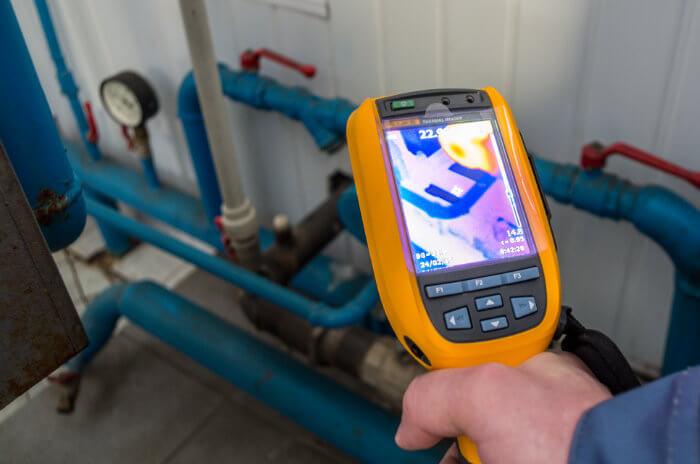
| Thermal imaging survey | £150 - £400 | 1 - 3 hours |
| Underground supply-pipe trace (tracer gas / correlation) | £300 - £700 | half a day |
| Day rate for complex or under-screed leaks | £595 - £1,500 | full day |
| Insurer-ready leak detection report | £350 - £600 | same visit, report in 1 - 3 days |
Typical UK trade cost-guide ranges, not a quote. Our detection is charged at a fixed hourly rate quoted at booking, under no find, no fee.
London Leak Specialist specialises in non-invasive water leak detection across every London borough. We combine acoustic listening equipment, thermal imaging cameras, tracer gas and moisture mapping to pinpoint the leak to a precise spot, then either repair it on the day or hand you a clear, insurer-ready report showing exactly what we found and where.
If we attend and cannot locate your leak, you do not pay the detection fee. That is what no find, no fee means — and it keeps our diagnosis honest.
Detection visits are charged by the hour at a fixed rate quoted before we attend and never exceeded, covered by no find, no fee. Repairs are priced separately and quoted before any work starts.
What you get
- Every water leak detection method on every van: acoustic, thermal, tracer gas and moisture mapping
- No find, no fee on all detection visits
- Same-day and next-day appointments across all 32 boroughs
- Insurer-ready reports with photos, readings and marked location
- Repair on the day where access allows
- Trace and access support for insurance claims
How it works
How a leak detection survey actually runs
01
Tell us the symptoms
Damp patch, pressure loss, high bill, warm floor, meter spinning — the pattern tells us where to start.
02
We isolate and test
Pressure tests on each circuit confirm which system is losing water: mains, heating, hot water or waste.
03
We pinpoint the leak
Acoustic profiling, thermal imaging and tracer gas narrow the leak to centimetres, not rooms.
04
Repair or report
We fix it there and then where possible, or document everything for your insurer and repair team.
Before you book anyone
6 things to check before you book leak detection in London
01
A cheap hourly rate is not a cheap survey
Plenty of London firms advertise leak detection at £80-£120 per hour, but hourly billing is open-ended: trade cost guides put typical diagnostic rates at £95-£145 per hour and day rates at £595-£1,500, and Checkatrade's 2026 guide records UK jobs ranging from £80 to £1,600 with an average around £500. A hard-to-trace leak under screed can absorb a full day at hourly rates. Get the rate, the expected hours and what you owe if nothing is found, in writing, before anyone arrives. Our detection visits are a fixed hourly rate agreed at booking - typically £340–£680 in total for a London home - so the rate cannot creep.
02
Read the no-find-no-fee small print before you rely on it
Published terms from UK detection firms show how narrow some guarantees are: central heating leaks and incoming mains are often excluded entirely, pipes in ducting or beneath a membrane may be carved out, and one firm defines a leak as "found" once narrowed to a 5m x 5m area - roughly a whole room. Another only honours no-find-no-fee if you also pay them to do the intrusive access work. Ask three questions: does it cover heating circuits, how precisely must the leak be located, and are there strings attached to claiming it.
03
Ask what equipment is actually on the van
No single technology finds every leak. Thermal imaging shows surface temperature, not water; acoustic microphones struggle with slow drips; tracer gas needs the circuit drained down. A one-method operator who turns up with only a thermal camera will miss leaks the other methods would catch, then charge for a second visit. Before booking, ask the firm to list what they bring as standard. We carry acoustic gear, thermal imaging, tracer gas (5% hydrogen in nitrogen), moisture mapping and per-circuit pressure testing on every visit, because most stubborn leaks need two or three methods to cross-confirm.
04
The report decides whether your insurer pays
Most buildings policies include trace and access cover, typically capped at £5,000-£10,000, which can reimburse the detection fee and the cost of opening up floors or walls. But loss adjusters reject vague reports. A claim-ready document must state the cause and origin of the leak, the detection methods used, moisture readings across affected areas, and photographic evidence. Two important caveats from real claims: trace and access generally only pays where the escape of water has caused damage, and gradual wear or poor maintenance can void cover. Ask any firm to show you a sample report before booking.
05
Rule out the boiler before paying anyone to hunt pipes
A sealed heating system that keeps losing pressure does not always mean a hidden pipe leak. A failed expansion vessel produces identical symptoms with no water escaping anywhere - homeowners describe paying several detection firms across repeat visits before anyone checked the boiler itself. A competent surveyor should pressure test each circuit separately and eliminate the boiler's internal components first. If a firm quotes for full-property detection without asking about your boiler's behaviour, treat that as a red flag.
06
Check who is responsible before you spend a penny
Not every leak is yours to fix. The water company owns the communication pipe up to your property boundary; you own the supply pipe from the boundary inwards, though Thames Water and other suppliers often repair or subsidise a first external supply-pipe leak free of charge - ring them before commissioning a survey if your meter spins with everything off. In flats, leaks in communal risers or above your ceiling are usually the freeholder's or the neighbour's problem, so notify the managing agent in writing first. Booking detection for a pipe you do not own wastes the fee.
Compare like for like
How to compare leak detection quotes in London
A hidden leak can run for weeks before the damage shows. When you ring round for help, the quotes you get back are rarely comparing like for like. This table sets out what usually sits behind a cheap hourly rate, a single-method firm, and the way we approach a London leak so you can judge value, not just price.
| What to check | A cheap hourly quote | A one-method firm | London Leak Specialist |
|---|---|---|---|
| Pricing model | Charges by the hour, so an open-ended search means the final bill is hard to predict and can climb well past the first estimate. | Often a flat call-out plus hourly time, which is clearer than pure hourly but still uncertain if the leak proves hard to trace. | A fixed hourly rate agreed before we start, usually £340-£680 in total for a London home, and no charge for the detection time if we do not find the leak. |
| Detection methods used | Tends to rely on one quick tool and some guesswork, which can miss leaks that do not show on the surface or behind walls. | Uses a single specialism well, such as thermal or acoustic, but that one method has blind spots on certain leaks and materials. | We combine methods such as thermal imaging, acoustic, moisture mapping and tracer gas, and pick the right one for your leak. |
| No find, no fee | Usually still bills for the time spent even if the leak is never located, so you can pay in full for an inconclusive visit. | Varies by firm; some offer it within their one method, but a missed leak may simply be referred on at extra cost. | We work on a no find, no fee basis, so if our survey does not locate the leak you are not charged for the detection visit. |
| Insurer-ready report | Often gives a verbal finding or a brief note, which insurers may reject when you claim for the resulting damage. | May provide a report limited to their method, which can lack the full evidence an insurer wants to see for trace and access. | We provide a written report with findings, images and method used, prepared to support a home insurance trace and access claim. |
| Access and reinstatement clarity | May lift floors or open walls to find the leak, then leave the making-good to you with little warning beforehand. | Focuses on detection and often stops at the find, so who repairs the opening and the leak itself can be left unclear. | We explain what access is needed before any work and set out clearly what is included and what reinstatement sits separately. |
| Boiler and expansion vessel check first | May head straight to invasive searching without first ruling out a failing boiler part that mimics a plumbing leak. | Their single method may not cover heating faults, so a pressure loss from the boiler can be missed or misdiagnosed. | We check likely culprits such as the boiler and expansion vessel first, since these often explain pressure loss and damp. |
| Who is responsible check | Rarely asks whether the leak is even yours to fix, so you may pay for a search on a neighbour or freeholder issue. | Concentrates on the technical find and may not flag when a shared pipe, party wall or communal supply is involved. | We help establish whether the leak is your responsibility or a neighbour's, freeholder's or water company's before deeper work. |
From the forums
The complaints Londoners repeat about leak detection
London homeowners swap leak detection war stories across MoneySavingExpert, DIYnot, Trustpilot reviews and property forums, and the same frustrations come up again and again: surprise bills, guarantees that evaporate in the small print, and insurance claims that stall on weak paperwork.
On MoneySavingExpert's insurance board, homeowners confused by trace and access cover
A recurring thread pattern: a boiler loses pressure, the homeowner pays for detection expecting insurance to reimburse it, then discovers trace and access only responds where the escape of water has actually caused damage - and that faults inside the boiler, like a failed expansion vessel, are treated as maintenance and excluded. One poster spent over £600 and ten trade visits before learning this. Our take: check your policy wording and the cause of the pressure loss before commissioning a survey, and use a firm whose report clearly separates insured damage from maintenance issues.
In Trustpilot reviews of national leak detection firms, customers on no-find-no-fee disputes
The sharpest complaints come from people who booked on the strength of a no-find-no-fee promise and were still billed - either because the firm identified the wrong leak and charged the full fee anyway, or because heating systems and mains pipes were quietly excluded from the guarantee. Reviewers consistently advise reading the terms page, not the homepage banner. Our take: a genuine guarantee should name its exclusions upfront and define what counts as finding the leak to a repairable point, not just a general area.
On DIYnot's plumbing forum, homeowners whose leaks nobody could find
Multiple long-running threads describe sealed-system pressure loss where two or three detection companies each charged a visit fee and found nothing, before a gas engineer eventually traced the problem to the boiler's expansion vessel - a fault that mimics a hidden leak without a drop of water escaping. Forum regulars now routinely tell posters to isolate circuits and check the vessel before paying for detection. Our take: per-circuit pressure testing at the start of a survey exists precisely to catch this, and any surveyor who skips it is guessing.
Across trade forums and cost-guide comment sections, homeowners comparing quotes
People report quotes for the same suspected leak ranging from under £100 to well over £1,000, which matches Checkatrade's published UK spread of £80-£1,600. The consensus advice is that suspiciously cheap callouts are usually a foot in the door - either the hours multiply once the engineer is on site, or the cheap visit finds nothing and a pricier second survey is recommended. Our take: stop comparing headline rates and start asking what each one is attached to - can the rate rise once an engineer is on site, how many hours do they expect, and what do you owe if they find nothing. Those are the answers you can hold a firm to.
On housing and insurance forums, leaseholders dealing with leaks between flats
A steady stream of posts involves water coming through a ceiling from the flat above, with confusion over who commissions and pays for detection - the leaseholder, the neighbour or the freeholder's block policy. The practical consensus: notify the managing agent in writing immediately, because block buildings insurance with trace and access often covers the survey, and an independent report establishing the leak's origin settles arguments about liability. Our take: an insurer-ready report that pins down cause and origin is worth far more in a flat dispute than a plumber's verbal opinion.
Questions
What leak detection costs, and what it includes
How do you find a leak without ripping up floors?
We work from the outside in. Pressure testing tells us which pipe circuit is leaking, thermal imaging shows temperature anomalies through floors and walls, acoustic microphones pick up the sound of escaping water, and tracer gas rises through the exact point of failure. By the time anything is opened up, we already know what is underneath.
What does no find, no fee actually mean?
If our engineer attends a confirmed live leak and cannot locate it, you pay nothing for the detection visit. If we find it — which is the overwhelming majority of visits — you pay the agreed hourly rate for the time on site.
Can you repair the leak on the same visit?
Usually, yes. Our detection engineers are qualified plumbers, so straightforward repairs — a failed joint, a pinholed copper pipe, a weeping valve — are fixed on the day. Repairs needing parts, floor access or drying time are quoted before we proceed.
Will my insurance cover the cost?
Most buildings insurance policies include trace and access cover, which pays for locating the leak and making good the access — even when the pipe repair itself is excluded. Our reports are written for exactly this purpose and are accepted by UK insurers.
How quickly can you attend?
Same-day appointments are usually available across inner London, and next-day almost everywhere else. If water is actively escaping, tell us when you book — live leaks are prioritised.
How much does leak detection cost in London?
Our detection is charged at a fixed hourly rate of £170, and most domestic surveys take two to four hours, so a typical visit comes to £340–£680 in total. The rate is agreed before we travel and does not rise on the day, and no find, no fee means an unsuccessful visit costs you nothing. For context across the trade: Checkatrade's 2026 guide puts UK leak detection at £80-£1,600 per job with an average around £500. Hourly diagnostic rates run £95-£145 and day rates £595-£1,500, which is where open-ended bills come from. fixed-fee surveys on a typical London home commonly land at £250 and £450, agreed before the visit, with repairs quoted separately once the leak is located.
Is leak detection covered by home insurance?
Usually, through trace and access cover in your buildings policy, typically capped at £5,000-£10,000. It can reimburse the detection survey plus the cost of opening up and reinstating floors or walls. Two conditions matter: the escape of water must have caused damage (trace and access is not a standalone claim), and the leak cannot stem from gradual wear or poor maintenance. A detailed report stating cause, origin, method and moisture readings is what loss adjusters expect.
How long does a leak detection survey take?
A typical London domestic survey takes two to four hours. Straightforward cases - a single circuit failing a pressure test with a clear acoustic signal - can be pinpointed faster. Complex jobs, such as leaks under screeded floors, underfloor heating loops or long external supply pipes, can take a full day because circuits must be drained and tracer gas given time to surface. You should have the leak located to a repairable point in one visit.
Can a water leak be found without ripping up floors?
Yes. Non-invasive methods locate the vast majority of hidden leaks before anything is opened up: acoustic microphones and correlators listen for escaping water, thermal imaging maps temperature anomalies from hot pipes, tracer gas (hydrogen in nitrogen) rises through concrete and tiles to a detector, and moisture mapping tracks the spread. Floors are only lifted once the leak is pinpointed, which keeps access damage - and reinstatement costs - to a single small area.
Who is responsible for a water leak - me or Thames Water?
It depends where the pipe sits. The water company owns the communication pipe up to your property boundary. From the boundary to your home, the supply pipe is your responsibility - although Thames Water often repairs or subsidises a first leak on an external supply pipe free of charge, so contact them before paying for work. Everything inside the property is yours; in flats, communal pipework is normally the freeholder's responsibility under the block policy.
Why does my boiler keep losing pressure if no leak can be found?
The most common culprit is a failed expansion vessel or internal boiler fault, which drops system pressure without any water escaping into the building - so detection equipment finds nothing because there is nothing to find. Forum threads document homeowners paying multiple detection firms before this was checked. Before booking a survey, have the boiler's expansion vessel tested and, during any survey, insist each heating circuit is pressure tested separately to isolate the true source.
London-wide
Leak detection across every London borough
Related services
Acoustic Detection
Acoustic leak detection in London: ground microphones and correlators pinpoint hidden water leaks under floors, in walls and underground, without digging.
Learn moreThermal Imaging
Infrared thermal imaging surveys find hidden water and heating leaks in London homes without opening floors or walls.
Learn moreTrace & Access
What trace and access costs in London and what your insurer covers.
Learn moreWater going somewhere it shouldn’t?
Tell us the symptoms and your postcode. We’ll confirm the visit, the fixed hourly rate, how long we expect to need and the arrival window before you commit to anything.
Book a detection visit