Combi Boiler Losing Pressure but No Leak Found? Here's What's Really Happening
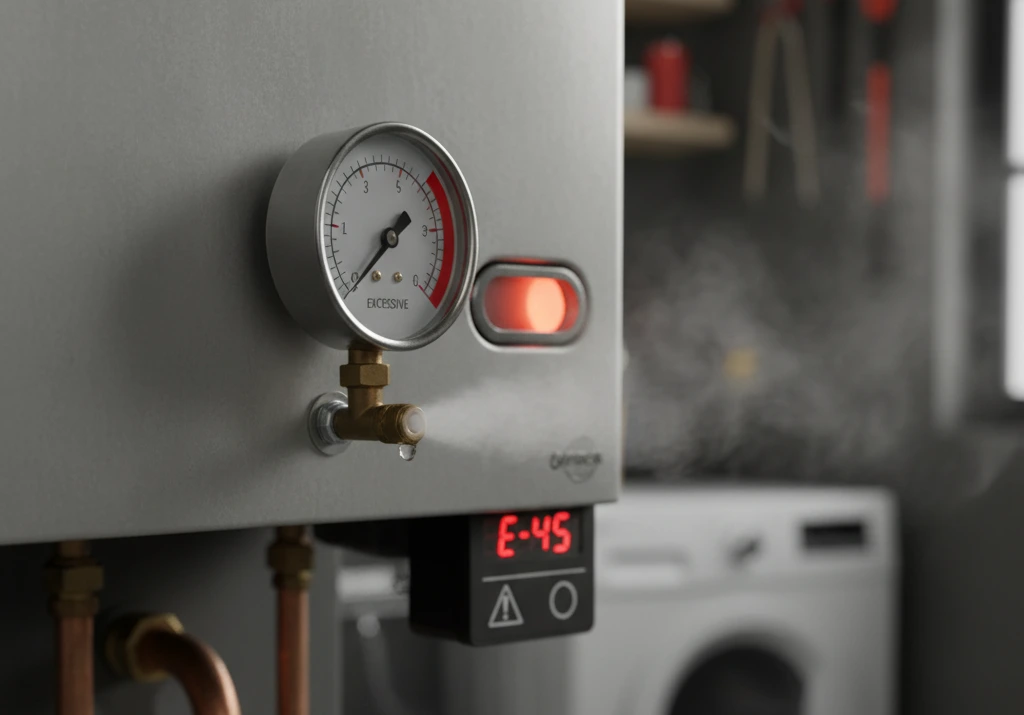
If your combi boiler keeps dropping pressure but every leak search comes up empty, the water is often not escaping into your home at all. Here is why a failed expansion vessel or weeping PRV mimics a hidden leak, and how a proper survey rules out the boiler before anyone charges for full-property detection.
It is one of the most frustrating problems a homeowner in London can face. The boiler pressure gauge on your combi creeps down day after day. You top it up with the filling loop, it holds for a while, then it drops again. You look under radiators, feel along skirting boards, check the airing cupboard, and lift a corner of carpet or two. There is no damp patch, no stain on a ceiling, no puddle anywhere. Yet the water keeps disappearing.
At this point most people reach a reasonable but wrong conclusion: there must be a hidden leak buried in the walls, under the floor or in the screed. Sometimes there is. But in the majority of these cases the water is not escaping into your building at all. It is being lost inside the boiler itself, and no amount of tracing pipes around the house will ever find it, because there is nothing there to find.
This article explains what is really happening when a sealed heating system loses pressure with no visible leak, why the expansion vessel is the usual culprit, how to tell a genuine hidden leak apart from an internal fault, and what a competent survey should do before anyone charges you for full-property leak detection.
How a sealed combi system holds pressure in the first place
A combi boiler runs a sealed central heating circuit. Unlike an old open-vented system with a tank in the loft, there is no header tank quietly topping things up. The water in your radiators and pipework is a closed loop, pressurised to roughly 1 to 1.5 bar when cold. That pressure is what you read on the gauge.
Water expands when it heats up. In a sealed system there is nowhere for that extra volume to go unless the system is designed to absorb it. That is the job of the expansion vessel: a metal chamber divided by a rubber diaphragm, with pressurised air or gas on one side and heating water on the other. As the system heats and the water expands, it pushes against the diaphragm and compresses the air cushion. As it cools, the cushion pushes the water back. This is what keeps your pressure roughly stable through heating cycles.
Two other components matter here. The pressure relief valve, or PRV, is a safety device that dumps water outside through a small copper pipe if system pressure climbs too high. And the filling loop is the flexible braided hose you use to add water and raise pressure. Understanding these three parts is the key to understanding almost every no-leak-found mystery.
Why a failed expansion vessel mimics a hidden leak
The expansion vessel is the single most common reason a sealed system loses pressure with no water appearing anywhere in the house. Here is the mechanism.
Over years of heating cycles the air charge behind the diaphragm slowly leaks away, or the rubber diaphragm perishes and splits. When the vessel loses its air cushion, it can no longer absorb expansion. So when the boiler fires and the water heats up, pressure spikes hard, often to 2.5 or 3 bar. The PRV sees that spike, decides the system is over-pressure, and does exactly what it is designed to do: it opens and releases a small amount of water outside through the overflow pipe.
When everything cools back down, the pressure drops, but now there is less water in the system than before because some was expelled through the PRV. So the cold pressure reads lower. You top it up. The next heating cycle, the same thing happens again. Day after day the pressure falls, and every drop of lost water went quietly out of a pipe on an outside wall, often high up or around the back of the property where nobody ever looks.
This is why it looks exactly like a hidden leak from inside the house. Water is genuinely leaving the system. It is just not leaving it anywhere you would ever think to check, and not one drop is getting into your floors or walls. A leak-detection firm can spend a day tracing every pipe run and correctly report that there is no leak in the building fabric, because there is not.
The other internal culprits
The expansion vessel is the headline suspect, but a few other internal faults produce the same no-visible-leak pattern:
- A weeping or failed PRV. Even at normal pressure, a PRV with a bit of grit or a worn seat can seep continuously. The water trickles out of the same outside overflow pipe. A telltale sign is a permanently damp or limescale-streaked patch below the PRV discharge outside.
- An automatic air vent (AAV) letting by. These can pass tiny amounts of water as vapour or spray over time.
- An internal boiler leak. A hairline failure on a heat exchanger, a pump head gasket, or a diverter valve can drip inside the boiler casing. Sometimes it evaporates on hot components and never reaches the floor, so the casing looks dry from outside.
- A faulty pressure sensor. Less common, but a failing sensor can misread and mislead, sending you chasing a loss that is smaller than it appears.
What unites all of these is that they are inside or on the boiler, not in your pipework. No survey of the house will find them, because the fault is not in the house.
Symptom to likely cause: a quick reference
The pattern of pressure loss often points strongly to the cause before anyone lifts a floorboard. Use this as a guide, not a diagnosis.
| What you observe | Most likely cause | Where the water is going |
|---|---|---|
| Pressure climbs high (2.5 to 3 bar) when hot, drops when cold, no visible damp indoors | Failed expansion vessel | Out of the PRV overflow pipe, outside |
| Slow constant drop even when heating is off; damp or limescale under an outside overflow pipe | Weeping or failed PRV | Outside overflow pipe |
| Pressure loss plus staining or drips inside the boiler casing | Internal boiler leak (heat exchanger, pump, diverter) | Inside the boiler, sometimes evaporating on hot parts |
| Damp patch, stain, warm spot on a floor or ceiling; pressure falls faster when heating runs | Genuine hidden pipe leak | Into the building fabric, floor or screed |
| Pressure drops only right after you use the filling loop, then stabilises | Filling loop passing or not fully closed | Nowhere, or back through the loop |
| Very slow drop over weeks, no other symptoms | Minor air displacement or a very small weep; often benign | Monitor before spending on detection |
How to tell an internal fault from a genuine hidden leak
You do not need specialist equipment to gather strong clues before you call anyone out. A few simple observations narrow things down considerably.
1. Watch the boiler pressure through a full heating cycle
Note the cold boiler pressure first thing in the morning before the heating fires. Then watch what happens as the system heats up. If the pressure shoots up towards 3 bar and you can hear or see water discharging from the outside overflow pipe, that is the classic expansion-vessel signature. A genuine pipe leak does not usually cause that high-pressure spike; it just causes a steady loss.
2. Check the outside overflow pipe
Find where the PRV discharge pipe exits the building, usually a short length of copper poking through an outside wall near the boiler. If it is dripping, wet, or has a white limescale trail down the brickwork beneath it, you have strong evidence the water is leaving through the PRV rather than through a hidden leak indoors.
3. Correlate the loss with heating use
Does pressure fall faster on days the heating runs hard, and barely move when it is off? Expansion and PRV faults are tied to heating cycles. A leak on a pipe that is always full of water can drop pressure even when the system is cold and idle.
4. Look and feel for damp, honestly
A real hidden heating leak nearly always leaves some evidence eventually: a musty smell, a cool or warm damp patch on a floor, a tide mark on a ceiling below, blown plaster, or lifting laminate. Underfloor and screed leaks can take time to show, but a total absence of any damp anywhere, combined with a high-pressure spike when hot, points firmly away from a building leak.
Important safety note: the boiler itself is sealed gas appliance. You can read the gauge and inspect external pipework yourself, but you must never open the boiler casing or work on internal components. That is the job of a Gas Safe registered engineer, and it is a legal requirement for gas appliance work in the UK.
When it genuinely is a hidden heating-pipe leak
None of this means hidden leaks do not exist. They absolutely do, and when they are real they need finding properly. The scenarios where a genuine buried leak is likely include:
- Underfloor heating or pipes buried in screed. A pinhole in a buried heating pipe or a UFH loop loses water into the slab. It can take weeks to surface, and the damp may appear metres from the actual fault.
- Pipework under solid floors or behind walls. Corroded or poorly made joints hidden in the structure, common in older London properties and in extensions where pipes were chased into walls.
- A loss that continues when the system is stone cold. If pressure keeps falling with the heating off and the expansion vessel and PRV have been cleared as suspects, the water is escaping somewhere under pressure, and that points to the fabric of the building.
- Visible or smellable evidence. Any genuine damp patch, warm spot on a floor, or persistent musty smell tied to heating use deserves proper investigation.
In these cases the right response is non-invasive detection, not guesswork and not pulling up floors on a hunch. Thermal imaging, acoustic listening equipment, tracer gas and moisture mapping can pinpoint a buried heating leak to within a small area, so any access is targeted and minimal. This is what our central heating leak detection in London service is built to do, once the boiler has been ruled out.
What forums and homeowners have learned the hard way
This exact scenario comes up constantly on UK home forums such as r/DIYUK on Reddit, DIYnot and the MoneySavingExpert boards. The pattern in these threads is remarkably consistent, and it is worth being honest about because it has cost people real money.
Homeowners describe topping up their boiler for months, then calling out a leak-detection firm who traces the pipework and finds nothing. Some describe paying more than one company, each confirming there is no leak in the building, before anyone thinks to look at the boiler. The relief in these threads, and the frustration, tends to arrive together when a gas engineer finally checks the expansion vessel, re-pressurises or replaces it, and the problem vanishes for a fraction of what the earlier detection callouts cost.
Because this story repeats so often, the regulars on these forums now give the same first advice almost every time someone posts a losing-pressure-no-leak question: before you pay anyone to hunt for a leak in your walls, get the expansion vessel checked and inspect the PRV overflow pipe outside. It is the cheapest thing to test and by far the most common cause. That is genuine community consensus built from a lot of people learning the expensive way, not a marketing line.
The lesson is not that leak detection is a waste of money. It is that the order of investigation matters enormously. Checking the boiler first can save you the cost of detecting a leak that was never in your house to begin with.
What a competent survey does before charging for full-property detection
This is where a good firm and a poor one part ways. A firm that sells you a full-property leak-detection survey the moment you mention pressure loss is not doing you a favour. A competent survey rules out the cheapest and most likely causes first.
Our approach is deliberately built around not charging you to find a leak that is not there:
- Per-circuit pressure testing to eliminate the boiler first. By isolating and pressure-testing individual circuits, we can establish whether pressure is actually being lost into the building fabric at all, or whether the loss is at the boiler. If the sealed heating circuit holds pressure when isolated, the problem is the appliance, and you have saved the cost of a whole-house detection survey.
- Expansion vessel and PRV checked as prime suspects. Because they are the most common cause, they are among the first things assessed, not an afterthought.
- Non-invasive detection only where it is warranted. If testing confirms the loss really is into the structure, we use thermal imaging, acoustic and tracer methods to locate it precisely, with minimal disruption to your home.
- No find, no fee. If we cannot locate a leak, you do not pay a detection fee.
- A fixed hourly rate agreed at booking. You know the rate before we start. No open-ended day rates that grow while someone traces pipes that were never leaking.
One honest caveat: we detect and locate. Any repair or replacement work on the gas boiler itself, including re-pressurising or replacing an expansion vessel or PRV, must be carried out by a Gas Safe registered engineer. Where the fault is inside the boiler, our job is to identify that clearly and quickly so you can get the right trade in without wasting money on a leak hunt first. You can read more about the underlying causes in our guide to boiler losing pressure causes and fixes, and about our wider leak detection in London service.
The bottom line
If your combi boiler keeps losing pressure but nobody can find a leak, the most likely explanation is that there is no leak in your home at all. The water is almost certainly being expelled through the PRV overflow pipe outside because the expansion vessel has lost its charge, or it is being lost somewhere inside the boiler. These faults perfectly mimic a hidden leak while leaving your floors and walls completely dry.
Before you pay for full-property leak detection, insist that the boiler is ruled out first: check the expansion vessel, inspect the PRV and its outside discharge pipe, and pressure-test the circuit to confirm whether water is genuinely escaping into the building. If it is, non-invasive detection will find it with minimal disruption. If it is not, you will have saved yourself the cost of searching for a leak that was never there. Getting the order of investigation right is the whole game.
Frequently asked questions
Why is my boiler pressure low when I cannot find a leak anywhere?
In most cases the water is not escaping into your home at all. The usual cause is a failed expansion vessel, which lets pressure spike when the system heats up. The pressure relief valve then dumps water out of an overflow pipe on an outside wall. It looks exactly like a hidden leak but leaves your floors and walls dry, which is why house searches find nothing.
How can I tell the difference between an expansion vessel fault and a real hidden leak?
Watch the gauge through a heating cycle. If pressure spikes towards 3 bar when hot and you find water or a limescale trail at the outside overflow pipe, that points to the expansion vessel or PRV. A genuine hidden leak tends to drop pressure steadily even when the heating is off, and usually leaves some damp, staining or a musty smell somewhere in the building over time.
Can I check or fix the expansion vessel myself?
You can safely read the pressure gauge and inspect the outside overflow pipe yourself. You must not open the boiler casing or work on internal parts. The expansion vessel, PRV and internal components are part of a sealed gas appliance, and by law that work must be carried out by a Gas Safe registered engineer. Our role is to detect and locate the fault, not to carry out gas work.
Why did a leak-detection company find nothing when my pressure is clearly dropping?
Because they were probably right. If the water is leaving through the PRV overflow outside or being lost inside the boiler, there is genuinely no leak in your building fabric to find. Tracing pipes around the house will always come up empty. This is exactly why the boiler should be eliminated with per-circuit pressure testing before anyone charges for a full-property detection survey.
When is it actually a real hidden heating leak?
Genuine buried leaks are most common with underfloor heating or pipes set in screed and solid floors, often in older properties or extensions. Suspect a real leak if pressure keeps falling when the system is completely cold and idle, if the expansion vessel and PRV have been cleared, or if there is any damp patch, warm spot or persistent musty smell tied to heating use.
Will I have to pay if you check my system and there is no leak in the house?
We agree a fixed hourly rate at booking so you know the rate up front, and we work on a no find, no fee basis. We use per-circuit pressure testing to establish whether water is really escaping into the building before recommending full-property detection. If the loss is at the boiler rather than in your pipework, we tell you plainly so you can get a Gas Safe engineer to the right job.