Damp Patch on the Ceiling: What to Do First (And What Not to Do)
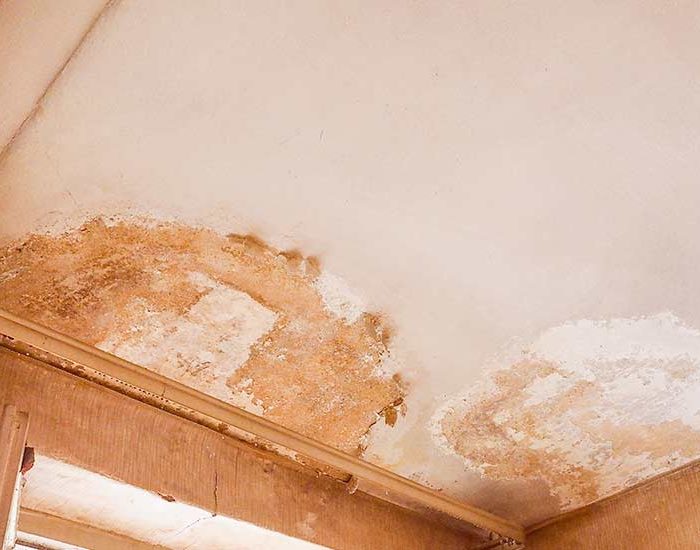
The stain is rarely under the leak. Here is how to read a ceiling patch, make it safe, and find the true source.
A brown ring on the ceiling is one of the most misread symptoms in a home. The instinct is to look directly above the stain — but water travels. It runs along joists, pipes and the top of plasterboard, then drops at a joint or a light fitting that may be a metre or more from the actual leak.
First: safety and containment
- If the ceiling is bulging with water, do not poke it over your head. Place a bucket, then pierce the lowest point of the bulge from the side with a screwdriver to release the water in a controlled way. A controlled drain beats an uncontrolled collapse.
- If water is near any light fitting or electrics, switch off the affected circuit at the consumer unit before anything else.
- If the flow is active and significant, close the internal stop tap and open cold taps to drain the pipework down.
Reading the stain
The pattern of the patch is diagnostic if you look closely:
- Grows when it rains, dries in between → roof, flashing, gutter or external wall — not plumbing.
- Grows when the bath or shower above is used → failed sealant, a leaking waste trap or shower tray. Run the shower deliberately for ten minutes and watch.
- Grows steadily regardless of weather or usage → a pressurised pipe (mains or heating) leaking continuously. These never fix themselves.
- Appeared once, dried, never returned → probably a one-off overflow or spill; monitor, but do not panic.
The tests worth running before opening anything
- Usage test: run each fixture above in turn — bath, shower, basin, toilet — for several minutes each, checking below between runs.
- Meter test: everything off, watch the water meter. Movement means a live mains-side leak.
- Boiler gauge test: if pressure drops overnight with the heating off, the wet ceiling and the tired boiler probably share a cause.
Flats: the awkward version
In conversions and blocks, the water above your ceiling is usually someone else's. Knock upstairs, check their bathroom floor and under their sink, and note what you find in writing. If the source is not obvious, an independent detection report establishes the origin — which is exactly what both sets of insurers will ask for. Our trace and access reports are written to settle precisely this question.
What not to do
- Do not paint over it. Stain block on an active leak buys weeks of looking better while the structure keeps soaking.
- Do not cut the ceiling open on a guess. If the source is not proven, you may open the wrong spot — and you have destroyed the evidence pattern a professional would have read.
- Do not wait for it to "settle down". Continuous stains mean continuous water.
When the source is not findable from above, non-invasive leak detection traces it through moisture mapping, thermal imaging and acoustic survey — and the ceiling gets opened once, in the right place, or often not at all.
Frequently asked questions
Whose insurance pays when a flat above leaks into mine?
Generally, your own contents/buildings policy handles your damage, and insurers settle between themselves based on origin and negligence. Everything moves faster with an independent report establishing where the water came from — without one, the dispute can outlast the damp.
How long does a ceiling take to dry after a leak is fixed?
Plasterboard typically needs two to four weeks of natural drying per soaking, longer for lath-and-plaster. Repaint only after a moisture meter confirms it is dry — sealed-in moisture blisters paint and breeds mould.
Is a dried-out brown stain safe to ignore?
A stain that never grows again is cosmetic. But confirm the cause was fixed or one-off before decorating over it — the stain is your early-warning system, and painting it away removes the warning.