How to Read Your Water Meter to Check for a Hidden Leak
A hidden leak can quietly waste hundreds of litres a day before you ever see a stain. Here is how to find your water meter, run the simple 30-minute test, read the leak-indicator dial, and tell an internal leak apart from an underground supply-pipe leak.
A rising water bill, the faint hiss of running water when every tap is off, or a warm patch on the floor that never quite dries. These are the small signs that something is leaking where you cannot see it. The good news is that you do not need any specialist equipment to get a first answer. Your water meter is already installed, already measuring every litre that flows into your home, and it can tell you within about half an hour whether water is escaping somewhere behind a wall, under a floor, or below the ground outside.
This guide walks you through the whole process in plain steps: how to find your meter, how to read it, how to run the classic 30-minute leak test, and how to interpret what you see afterwards. Most importantly, it explains the difference between an internal leak inside the house and an underground leak on your supply pipe, because the two problems are found and fixed in very different ways. If the test confirms you have a leak, the closing section covers what a professional leak detection in London visit actually involves and how the costs tend to work.
Why your water meter is the best first test
Every drop of mains water that enters your property passes through the meter first. That makes it the single most reliable witness you have. Unlike a damp patch, which might be condensation, a spilled drink, or an old stain, the meter deals only in facts: water is either moving through it or it is not. If you shut off every tap and appliance in the house and the meter still registers flow, water is going somewhere it should not.
On the DIY forums that many London homeowners turn to first, such as r/DIYUK and the MoneySavingExpert boards, the meter test is almost always the first thing experienced posters suggest before anyone spends a penny. The general consensus is consistent and sensible: check the meter yourself before you call anyone out, because it is free, it takes half an hour, and it turns a vague worry into a clear yes or no. That framing is worth taking to heart. A confirmed reading gives you something solid to act on, rather than paying for a visit only to discover a dripping overflow you could have spotted yourself.
Step one: find your water meter
Before you can read a meter, you have to find it, and in London that is not always obvious. Meters live in one of a few typical places, depending on the age of the property and how it was plumbed.
Outside, at the boundary
The most common location is an underground chamber near the boundary of your property, often under the pavement or in the front garden close to the street. Look for a small round or rectangular plastic or metal cover, usually about the size of a saucer or a paperback book, sometimes marked with a water symbol or the word "water". Lift the lid, which may be stiff or held by a small catch, and you will usually see the meter at the bottom of a short vertical tube, sometimes under a foam frost plug you need to lift out first.
Inside the property
In many flats and some houses, particularly newer builds and converted properties, the meter is indoors. Common spots include under the kitchen sink, in an airing cupboard, in a downstairs toilet, near the internal stop tap, or in a communal riser cupboard in a block of flats. If you have an internal stop tap where the mains pipe first enters the building, the meter is often close by.
Boundary box versus internal meter
The distinction matters for leak detection, so it is worth understanding now. A boundary meter sits at the edge of your land, which means the pipe running from that meter to your house, your private supply pipe, is your responsibility and can itself develop an underground leak. An internal meter sits inside, so any leak the meter detects is almost always within the building. Note where yours is before you start, because it shapes how you read the results later.
If you genuinely cannot locate a meter anywhere, your property may still be on unmetered charges, or the meter may be shared in a communal arrangement. In that case the physical test below will not be possible, and you would move straight to visual checks and, if needed, professional detection.
Step two: understand what you are looking at
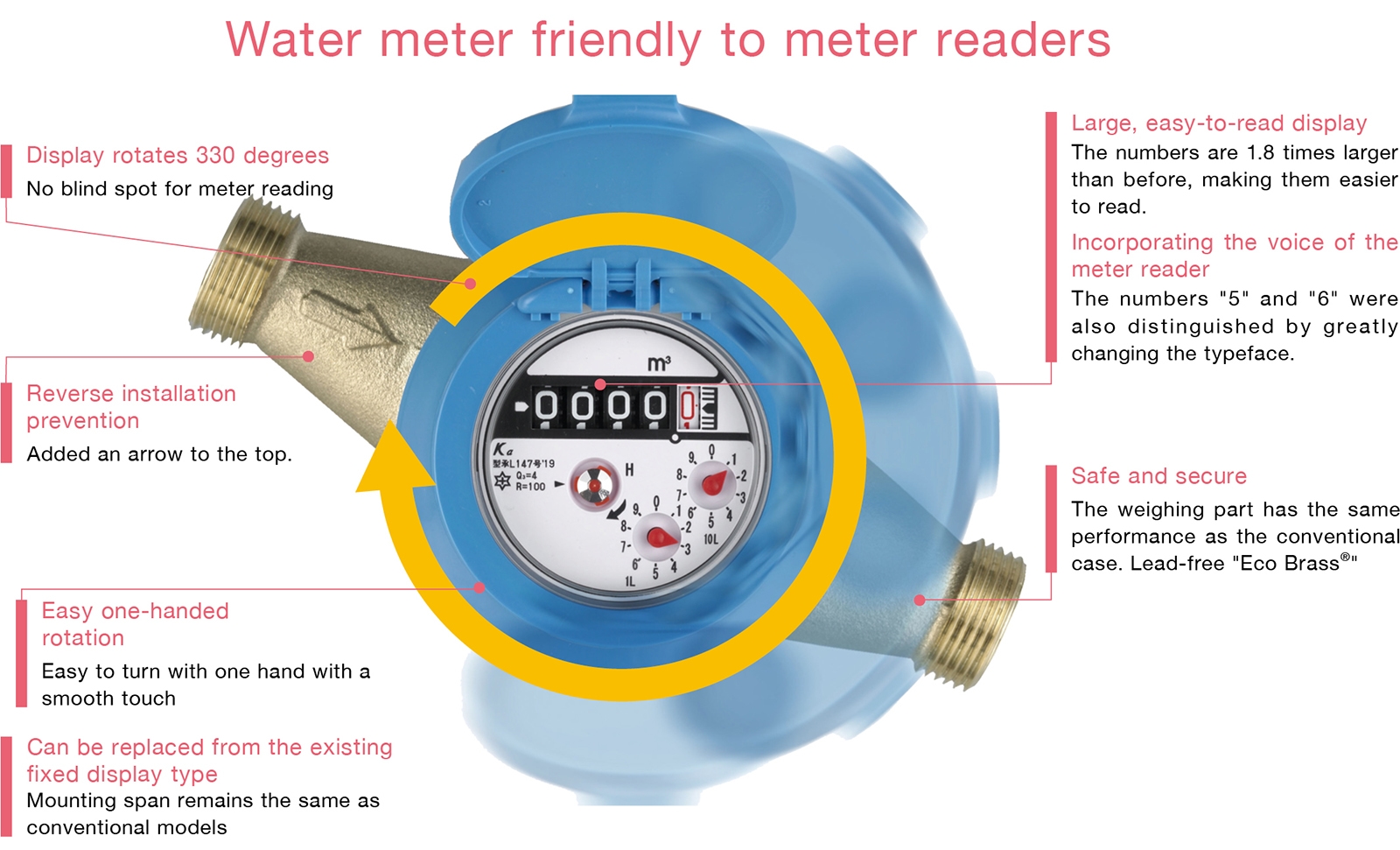
Modern water meters in London are usually one of two types. Most are digital or mechanical odometer-style meters showing a row of numbers, much like a car mileage display. The black digits on the left record cubic metres of water used. The red digits, or the numbers after the decimal point, record litres and fractions of a litre. One cubic metre equals 1,000 litres, so the smaller red figures are what move first and fastest when water is flowing.
The feature that makes the meter so useful for leak hunting is the leak-indicator dial. On many meters this is a small rotating triangle, star, or tiny wheel, often red or silver, set into the face of the meter. It is deliberately sensitive: it spins with even the tiniest flow of water, far smaller than the amount needed to move the main number display. When absolutely no water is moving, this indicator sits completely still. When it turns, even slowly, water is passing through. Some newer digital meters show a small flow symbol or a moving segment on the screen instead of a physical dial, but the principle is identical.
| What you see on the meter | What it means |
|---|---|
| Black digits | Cubic metres used (1 = 1,000 litres) |
| Red digits or figures after the decimal | Litres and fractions of a litre |
| Small rotating triangle, star or wheel | Leak-indicator dial: moves with any flow, however small |
| Flow symbol or moving segment (digital) | Electronic equivalent of the leak-indicator dial |
Step three: run the 30-minute leak test
This is the heart of the whole exercise. The test works by removing every legitimate reason for water to be moving, then checking whether it moves anyway. Follow the steps in order and do not rush them.
- Turn off every water-using appliance and tap. Close all taps in the kitchen, bathrooms, and any outside taps. Make sure the washing machine and dishwasher are not mid-cycle. Switch off any water softener regeneration. If you have a combi boiler or a heating system that tops itself up, be aware of it, though it should not draw water when idle.
- Check that nothing is filling silently. The most common thing people forget is a toilet cistern that is slowly refilling, or an ice maker, or a garden irrigation timer. Lift the toilet lids and listen. A cistern that trickles constantly will fail the test and send you chasing a leak that is really just a worn flush valve.
- Take your first reading. Write down the full meter reading, including the small red litre figures, and note the exact position of the leak-indicator dial. A phone photograph of the meter face is the easiest way to capture this accurately.
- Leave the water untouched for 30 minutes. During this window, do not flush a toilet, wash your hands, or draw any water at all. If anyone else is home, tell them. Even a single hand-wash will invalidate the result.
- Take your second reading. Return to the meter and read it again, once more capturing the red litre figures and the dial position. Compare it against your first photograph.
If you want a stricter version of the test, the overnight approach is even more revealing. Take a reading last thing at night, use no water at all until morning, and read it again before anyone showers or flushes. A change overnight, when the house was genuinely still, is very hard to explain away as anything other than a leak.
Step four: interpret the result
Now you compare your two readings and watch the leak-indicator dial. There are three broad outcomes.
The meter is completely still
If the numbers are identical and the leak-indicator dial has not moved at all, you almost certainly do not have a continuous leak on the mains side. That is genuinely reassuring. It does not completely rule out an intermittent problem, or a leak on a waste pipe that carries water away rather than water coming in, but it means no fresh mains water is escaping while everything is off.
The dial is spinning with every tap off
If that little triangle is turning while you are certain no water is being used, water is escaping somewhere. This is the classic sign of a hidden leak, and it is exactly the situation described in our guide to why your water meter is spinning. A fast, obvious spin points to a larger leak. A slow crawl of the dial suggests a smaller one, perhaps a weeping joint or a pinhole. Either way, the meter is telling you there is a genuine, continuous loss of water.
The numbers moved but the dial was hard to read
On some meters the leak-indicator dial is faint or absent, so the number change over 30 minutes is your evidence. Even a small increase in the red litre figures, with everything off, indicates flow. If you saw the reading climb at all, treat it the same as a spinning dial: something is leaking.
Internal leak or underground supply-pipe leak?
This is the question that decides what happens next, and your meter can help you narrow it down before anyone visits. The key is the internal stop tap, the valve where the mains pipe enters your home and where you can shut off water to the whole house.
The logic is simple. The supply pipe runs from the meter, usually at or near the boundary, underground across your land, and into the house, where the internal stop tap sits. If you close that stop tap, you cut off everything inside the house but leave the underground supply pipe still connected to the meter. So the test is this: with a confirmed leak showing on the meter, close the internal stop tap fully, wait a few minutes, and watch the leak-indicator dial again.
- Dial stops when the internal stop tap is closed. This strongly suggests the leak is inside the house, downstream of the stop tap. That points to internal pipework: under floors, in walls, beneath the bath, or on heating pipes. The underground supply pipe is likely fine.
- Dial keeps turning even with the internal stop tap closed. This is the signature of an underground supply-pipe leak. Water is escaping from the buried pipe between the meter and the house, before it ever reaches the stop tap, which is why closing that tap makes no difference. This scenario is covered in detail in our guide to underground water leak detection in London.
The distinction is not academic. An internal leak is usually traced within the fabric of the building using acoustic and thermal methods, and the repair is a plumbing job. An underground supply-pipe leak involves locating the exact spot along a buried run, sometimes under a driveway or garden, and the repair may mean a targeted excavation or a pipe replacement. Knowing which one you are dealing with before booking anyone means you get the right specialist and the right quote from the start.
| Test result | Likely leak location | Whose responsibility |
|---|---|---|
| Dial stops when internal stop tap closed | Inside the house (pipes under floors, walls, heating) | Homeowner, internal plumbing |
| Dial keeps turning with internal stop tap closed | Underground supply pipe between meter and house | Usually homeowner, private supply pipe |
| No movement at all | No continuous mains leak detected | Investigate waste pipes or intermittent causes |
One point on responsibility that regularly confuses people on the forums: the private supply pipe, the section running from the boundary meter to your home, is generally the homeowner's responsibility to maintain and repair, not the water company's. The water company looks after the main in the street and, in most cases, up to the boundary. This is a common source of surprise, so it is worth checking your own arrangement rather than assuming the leak will be fixed for free.
What the forums get right, and where to be careful
The collective wisdom on r/DIYUK and MoneySavingExpert is genuinely useful and, on the whole, sound. The recurring themes are worth repeating because they save people money: always run the meter test first, always rule out a running toilet before panicking, and never dig up a driveway on a hunch about where the pipe runs. That last point matters. Guessing the location of an underground leak and excavating blindly is how a modest problem turns into a large bill and a ruined garden.
Where caution is needed is with the specifics. Community advice is a starting point, not a diagnosis. The same symptom, a spinning dial, can come from a dozen different causes, and the correct fix depends entirely on finding the actual source. The value of the meter test is that it tells you reliably whether a leak exists and roughly where, internal or underground. It does not tell you the precise spot behind the plaster or under the lawn. That final step, pinpointing the leak without tearing the place apart, is where professional detection earns its place.
Next steps if you have confirmed a leak
If your meter test came back positive, here is a sensible order of action.
- Rule out the easy culprits first. Re-check every toilet cistern, the overflow pipes outside, dripping taps, and any appliance that might refill. Fixing a worn flush valve is cheap and might be the whole answer.
- Note down your evidence. Keep your two meter photographs, the times, and the result of the internal stop tap test. This tells a professional exactly what you found and speeds up their visit.
- Decide internal versus underground. Use the stop-tap test above to point yourself, and any specialist, in the right direction.
- Book non-invasive detection if the source is hidden. If the leak is real but you cannot see where it is coming from, this is the point to bring in specialist equipment rather than opening up walls or floors speculatively.
Professional leak detection is deliberately non-invasive. The aim is to find the exact source using acoustic listening equipment, thermal imaging, tracer methods, and moisture mapping, so that any repair is small and targeted rather than exploratory. Instead of lifting an entire floor, a good detection survey narrows the leak to a specific point, and only that point needs to be opened.
On cost, it helps to think in terms of typical UK trade cost-guide ranges rather than a single figure, because the price depends on the size of the property, how accessible the pipework is, and whether the leak is internal or underground. As a general framing, a professional leak-detection survey commonly falls somewhere in the low-to-mid hundreds of pounds, with underground supply-pipe surveys tending toward the higher end because of the extra work involved in tracing a buried run. Any subsequent repair or excavation is a separate cost that depends entirely on what is found.
Two things are worth looking for when you choose who to call. The first is a no find, no fee arrangement, which means that if the leak genuinely cannot be located, you are not left paying for a fruitless visit. The second is a fixed hourly rate agreed at the point of booking, so you know the detection rate before anyone arrives and there are no surprises added on the day. Together these two things turn an anxious, open-ended worry into a predictable, bounded decision, which is exactly what you want when water is quietly escaping somewhere in your home.
Start with the meter. It is free, it is honest, and in half an hour it will tell you whether you have a problem worth pursuing. From there, the path is clear: rule out the simple causes, work out whether the leak is internal or underground, and if it is hidden, bring in non-invasive detection to pinpoint it before a single tile is lifted.
Frequently asked questions
How long should I leave the water off for the meter test?
Thirty minutes is enough to reveal most continuous leaks, provided you use absolutely no water during that time. For a stricter result, run the test overnight: take a reading last thing at night, use no water until morning, and read it again before anyone showers or flushes. A change over a still night is very hard to explain as anything other than a leak.
What is the leak-indicator dial on my water meter?
It is a small rotating triangle, star, or wheel set into the meter face, often red or silver. It is deliberately sensitive and turns with even the tiniest flow of water, far less than is needed to move the main number display. When no water is moving it sits perfectly still, so if it turns while every tap is off, water is escaping somewhere. Some digital meters show a moving flow symbol instead.
How do I tell an internal leak from an underground supply-pipe leak?
Once the meter confirms a leak, close your internal stop tap, the valve where the mains enters the house, and watch the leak-indicator dial again. If the dial stops, the leak is inside the house, downstream of the tap. If it keeps turning, the leak is on the underground supply pipe between the meter and the house, before the stop tap. That single test points you to the right specialist.
My toilet keeps refilling. Will that ruin the meter test?
Yes. A cistern that trickles constantly, an ice maker, or a garden irrigation timer will all move the meter and make it look like a hidden leak. Before you start, check every toilet by lifting the lid and listening, and make sure no appliance is refilling. A running toilet is one of the most common false alarms and one of the cheapest things to fix.
Is the underground supply pipe my responsibility or the water company's?
The private supply pipe, the section running from the boundary meter to your home, is generally the homeowner's responsibility to maintain and repair. The water company looks after the main in the street and usually up to the boundary. This surprises many people, so it is worth checking your own arrangement rather than assuming a buried leak on your land will be repaired for free.
What does professional leak detection cost and is it invasive?
Detection is non-invasive: acoustic listening, thermal imaging, and moisture mapping pinpoint the source so any repair is small and targeted rather than exploratory. As a general framing, typical UK trade cost-guide ranges put a survey in the low-to-mid hundreds of pounds, with underground surveys toward the higher end. Look for no find, no fee and a fixed hourly rate agreed at booking, so the rate is known before anyone arrives.