Is a Water Leak an Emergency? When to Call Now vs When It Can Wait
Not every leak needs a midnight call-out, and not every drip is harmless. Here is how to tell a genuine plumbing emergency from something that can safely wait until morning, plus the first action to take in each case.
A water leak sits in an awkward middle ground. Some leaks will flood a flat, short out the lights and ruin a ceiling within the hour. Others will sit and drip for weeks with no real consequence beyond an annoying sound and a slightly higher water bill. The trouble is that in the moment, with water where it should not be, almost every leak feels like a crisis. That feeling is exactly what leads people to overpay for a middle-of-the-night call-out they did not need, or, just as costly, to shrug off a leak that genuinely could not wait.
This guide is meant to help you make that call calmly. We will walk through what turns a leak into a real emergency, what counts as urgent but not an emergency, and what you can reasonably monitor. For each situation you will get the first thing to do, because the right immediate action often matters more than how quickly a plumber arrives. Throughout, the aim is honest triage, not scaring you into a booking.
The one question that decides almost everything
Before you think about anyone's arrival time, ask yourself a single question: can I stop the water, and is it near anything dangerous? Nearly all leak triage flows from that. A leak you can isolate at a valve, that is not touching electrics and not bringing a ceiling down, is a problem you control. A leak you cannot stop, or one that is near power or structure, is a problem that is controlling you. The second kind is what we mean by an emergency.
This is also the consistent thread you will find if you read through threads on r/AskUK and r/DIYUK, where people describe leaks and ask whether to panic. The recurring, sensible advice from tradespeople and experienced homeowners is nearly always the same order of operations: find your stopcock, turn the water off, kill the power if water is anywhere near it, and only then decide how fast you need a professional. Very few of those threads end with "you needed someone that second" once the water was actually off. That is the mindset this guide is built around.
What makes a leak a genuine emergency
A genuine emergency is a leak where delay causes escalating damage or a safety risk, and where you cannot fully control the situation yourself. If any of the following are true, treat it as an emergency and act now.
Active flooding you cannot stop
Water pouring or spraying faster than you can contain it, and you either cannot find the isolation valve or turning it off does not stop the flow. A burst pipe, a failed flexible tap connector or a split on the incoming main all fall here. Every minute of uncontrolled water is more damage to floors, plaster and anything below.
Water near electrics
Water dripping into a light fitting, running down near sockets, pooling by your consumer unit (fuse box) or coming through a ceiling with downlights in it. Water and electricity together is a genuine hazard, not just a property one. This is an emergency regardless of how fast the water is moving.
A ceiling that is bulging or sagging
A ceiling holding a pocket of water can hold a surprising amount, and when it fails it comes down all at once, often with the light fitting. A visibly bulging, sagging or dripping ceiling is an emergency because the risk is sudden and can injure someone standing underneath.
No way to isolate the water
Even a moderate leak becomes an emergency if you have no means to stop it. A seized stopcock, a valve that spins without closing, or a leak upstream of any valve you can reach all leave you exposed. If you cannot turn it off, you need someone who can.
Sewage or foul water
A backed-up soil pipe, a foul-smelling flood or waste water coming back up through a toilet or drain is both a health hazard and a fast-spreading contamination problem. Treat this as an emergency and keep people and pets away from the water.
No water or no heating in genuinely cold weather
A leak that has forced you to shut off the whole supply, leaving a household with no drinking water, or a heating failure caused by a leak during a cold snap, moves up the priority list, especially where there are elderly residents, very young children or anyone unwell. In freezing conditions this is about welfare, not just convenience.
Urgent, but not a 2am emergency
Plenty of leaks are real and do need attention, but attention within a day or two rather than within the hour. Paying an emergency premium for these is usually money you did not have to spend. The distinguishing feature is that the water is contained or slow, there is no safety risk, and you can isolate or catch it.
A slow, steady drip you can catch
A dripping tap, a weeping compression fitting under a sink, or a slow drip from a waste trap that a bucket or towel can handle. It is wasting water and it will not fix itself, but a bowl underneath buys you until normal working hours comfortably.
A damp patch that is not growing quickly
A stain on a ceiling or wall that is damp but stable, or growing only very slowly over days, points to a small or intermittent leak rather than a burst. It needs investigating before it worsens, but it is a booking, not a call-out. This is often exactly where proper leak detection in London earns its keep, because the visible damp is frequently nowhere near the actual source.
Boiler pressure that keeps dropping
If your combi boiler keeps losing pressure and you are topping it up every few days, there is almost certainly a leak somewhere in the sealed heating system, or a failed internal part. It is worth sorting before it gets worse, but a gradually falling gauge is not an emergency in itself. Watch for actual dripping around the boiler, radiators or visible pipework, which would raise the urgency.
A small leak you have successfully isolated
Here is the key point: many "emergencies" stop being emergencies the moment you turn off the relevant valve. If you have isolated a leaking toilet at its service valve, or shut off the supply to one bathroom while the rest of the house works normally, you have converted an emergency into a scheduled repair. That is a good outcome and it should cost you less.
What you can reasonably monitor
A smaller group of leaks can simply be watched for a short while, as long as you are genuinely keeping an eye on them and not just hoping.
- A single, occasional drip from a waste pipe that only appears when a specific appliance drains, with no growing damp around it.
- A faint tide mark that has not changed in size for weeks and stays dry to the touch, which may be historic rather than active.
- Very slight weeping at a fitting that you have dried, marked and are checking daily to see whether it is actually getting worse.
The honest caveat: monitoring only counts if you actually do it. Dry the area, note the date, check it daily, and photograph any change. The moment a monitored leak grows, spreads or starts to touch anything it should not, it graduates up the list. Damp that is ignored for months is how small leaks turn into rot, ruined plaster and expensive structural repairs.
It also helps to keep a rough sense of proportion about cost. As a general steer, and quoting typical UK trade cost-guide ranges rather than a fixed price, a straightforward daytime repair such as swapping a tap or a leaking flexible connector often sits somewhere in the region of the lower tens to the low hundreds of pounds once parts and labour are counted. An emergency, out-of-hours call-out naturally carries a premium on top of that, which is exactly why converting an emergency into a scheduled job by isolating the water is worth doing wherever you safely can. None of these figures are a quote, and the real cost depends on the fault, the parts and the access; the point is simply that timing and containment genuinely change what you pay.
Quick triage table
| Scenario | Emergency? | First action |
|---|---|---|
| Burst pipe, water spraying, cannot stop it | Yes, now | Turn off the stopcock; if none works, call for help immediately |
| Water dripping into a light or near sockets | Yes, now | Switch off that circuit or the main power, keep clear, then call |
| Ceiling bulging or sagging with water | Yes, now | Clear the room below, place a bucket, do not prod it, call |
| Stopcock seized, leak cannot be isolated | Yes, now | Contain with towels and buckets, call for isolation |
| Sewage or foul water backing up | Yes, now | Keep people and pets away, stop using drains, call |
| No water or no heat during a cold snap | Usually yes | Check on vulnerable residents, then arrange a prompt visit |
| Dripping tap or slow fitting leak, contained | No, urgent | Put a bowl under it, book a same or next-day visit |
| Stable damp patch, not spreading fast | No, urgent | Mark and photograph it, book leak detection |
| Boiler pressure slowly dropping, no visible leak | No, urgent | Top up per the manual, book an inspection |
| Occasional drip, no growing damp | No, monitor | Dry, date, check daily, act if it worsens |
The immediate actions that apply to almost every leak
Whatever category your leak falls into, a handful of first moves rarely go wrong. Doing these calmly, in order, is usually more valuable than the speed of the call-out itself.
Find and use your stopcock
Your internal stopcock is most often under the kitchen sink, in an airing cupboard, or near where the mains enters the property. Turn it clockwise to close. Knowing where it is before you ever need it is one of the best five-minute jobs you can do as a householder. If it is stiff, do not force it so hard that it snaps; if it will not close, that in itself pushes the situation towards emergency.
Isolate locally where you can
Many fittings have their own small service valve, for example under a toilet cistern, on tap supply pipes or feeding a single appliance. Closing the local valve lets the rest of the house keep working while you deal with one problem. This is the single most common way people downgrade an emergency to a routine repair.
Kill the power if water is anywhere near electrics
If water is near lights, sockets or the consumer unit, switch off the affected circuit or the main switch before you go near the water. Do not touch electrical fittings that are wet. Safety comes before saving the carpet.
Contain and protect
Buckets, bowls, towels and a mop limit the damage while you wait. Move rugs, electronics and anything valuable clear of the water and out from under a suspect ceiling. Photograph everything for insurance before you clean up.
Deal with any smell of gas separately
If you ever smell gas, this is not a plumbing decision. Do not touch electrical switches, open the windows, turn off the gas at the meter if you safely can, leave the property and call the National Gas Emergency Service on 0800 111 999. Handle that first and independently of any water issue. For a fuller walkthrough of first steps, see our guide on what to do in a plumbing emergency in London.
How we approach emergency leaks, honestly
Because so much leak worry is really worry about being taken advantage of at a vulnerable moment, it is worth being plain about how we work. If you do decide you need us, we agree the price with you before we travel, so there is no meter running in your head while you wait and no nasty surprise at the door. We give you an honest arrival window rather than a vague promise of "on our way", so you can plan around it.
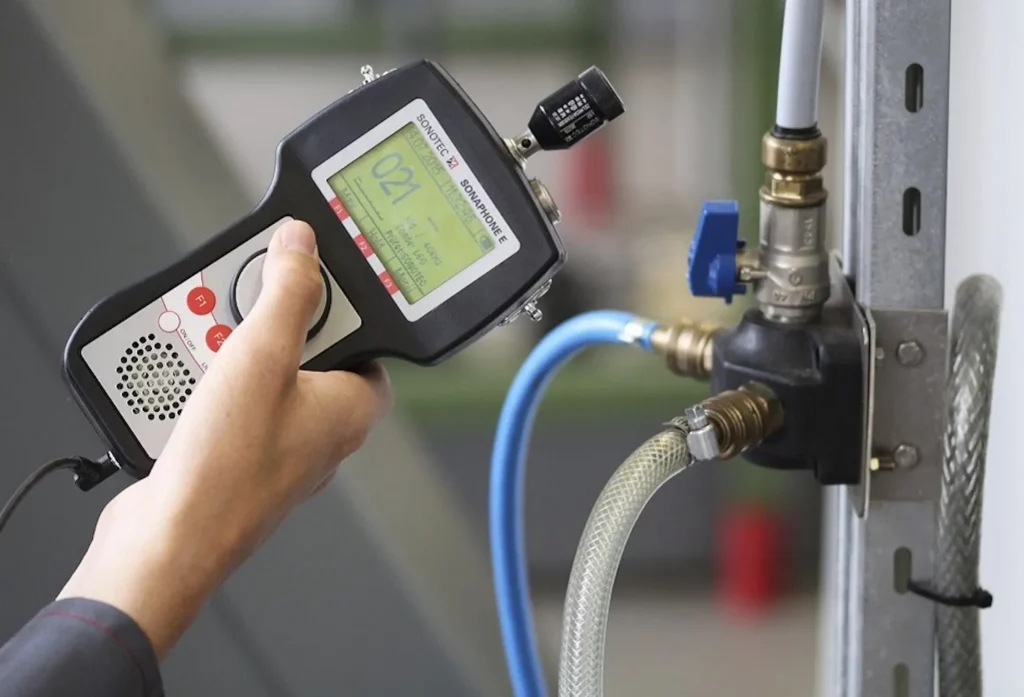
Our first instinct on the phone is to help you isolate the water yourself if you can, because getting the flow stopped protects your home immediately and sometimes means the visit can wait until a cheaper, calmer time. Our engineers are also same-day emergency leak detection specialists, which matters when the visible damp is not where the leak actually is; tracing it properly with the right equipment avoids pulling up floors and knocking through walls on guesswork. If your situation is genuinely urgent you can reach an emergency plumber in London through us, but we would rather tell you honestly that something can wait than charge you for a night rate you did not need.
The bottom line
Most leaks are not emergencies once the water is off. The genuine emergencies are the ones you cannot stop, the ones near electricity, a ceiling about to give way, sewage, or a loss of water or heat when the weather is cold and someone in the home is vulnerable. Everything else is either an urgent booking or something to monitor honestly with a bowl, a date and a daily check. Learn where your stopcock is, keep a couple of buckets handy, and you will already be ahead of the panic that costs people the most money.
Frequently asked questions
Is a dripping tap an emergency?
No. A dripping tap is a classic urgent-but-not-emergency job. Put a bowl or cloth underneath to catch the water and book a repair during normal hours. It is wasting water and will not cure itself, but it does not justify an emergency call-out rate. The only exception is if the drip is landing on or near electrics, in which case switch off that circuit and treat it more seriously.
Should I turn off the water at the first sign of a leak?
If the leak is active and you cannot easily control it, yes, turning off the stopcock is almost always the right first move and buys you time. For a tiny, contained drip you can often just isolate the single fitting at its local service valve and leave the rest of the house on. Knowing where your stopcock is before an emergency happens makes this decision far easier.
My boiler pressure keeps dropping. Is that an emergency?
Usually not on its own. A slowly falling pressure gauge points to a small leak in the sealed heating system or a failed part, and it is worth booking an inspection before it worsens. Top the pressure back up following your boiler manual in the meantime. It becomes more urgent if you can see water actually dripping from the boiler, a radiator or pipework, or if you lose heating entirely in cold weather.
There is a damp patch on my ceiling but no dripping. What should I do?
Mark the edge of the patch with a pencil and photograph it, then check daily. If it is stable and dry to the touch it may be an old, historic mark. If it is growing, feels wet, or is above a light fitting, treat it as more urgent and arrange leak detection, because the actual source is often some distance from where the damp appears and finding it properly avoids unnecessary damage to your home.
Is water coming through the ceiling always an emergency?
Not always, but it is one of the situations most likely to be. If the ceiling is bulging, sagging or dripping steadily, treat it as an emergency: clear the room below, keep people away from underneath, place a bucket, and do not prod it, because a water-filled ceiling can collapse suddenly. If it is a faint stable stain with no active dripping, it is urgent rather than an emergency and can be investigated during normal hours.
What should I do if I smell gas as well as having a leak?
Deal with the gas first and separately. Do not operate any electrical switches, open windows for ventilation, turn off the gas at the meter if you can do so safely, leave the property, and call the National Gas Emergency Service on 0800 111 999. A suspected gas leak overrides any water issue and is not something to weigh up against plumbing convenience.