Leak Detection for Restaurants, Cafes and Commercial Kitchens in London
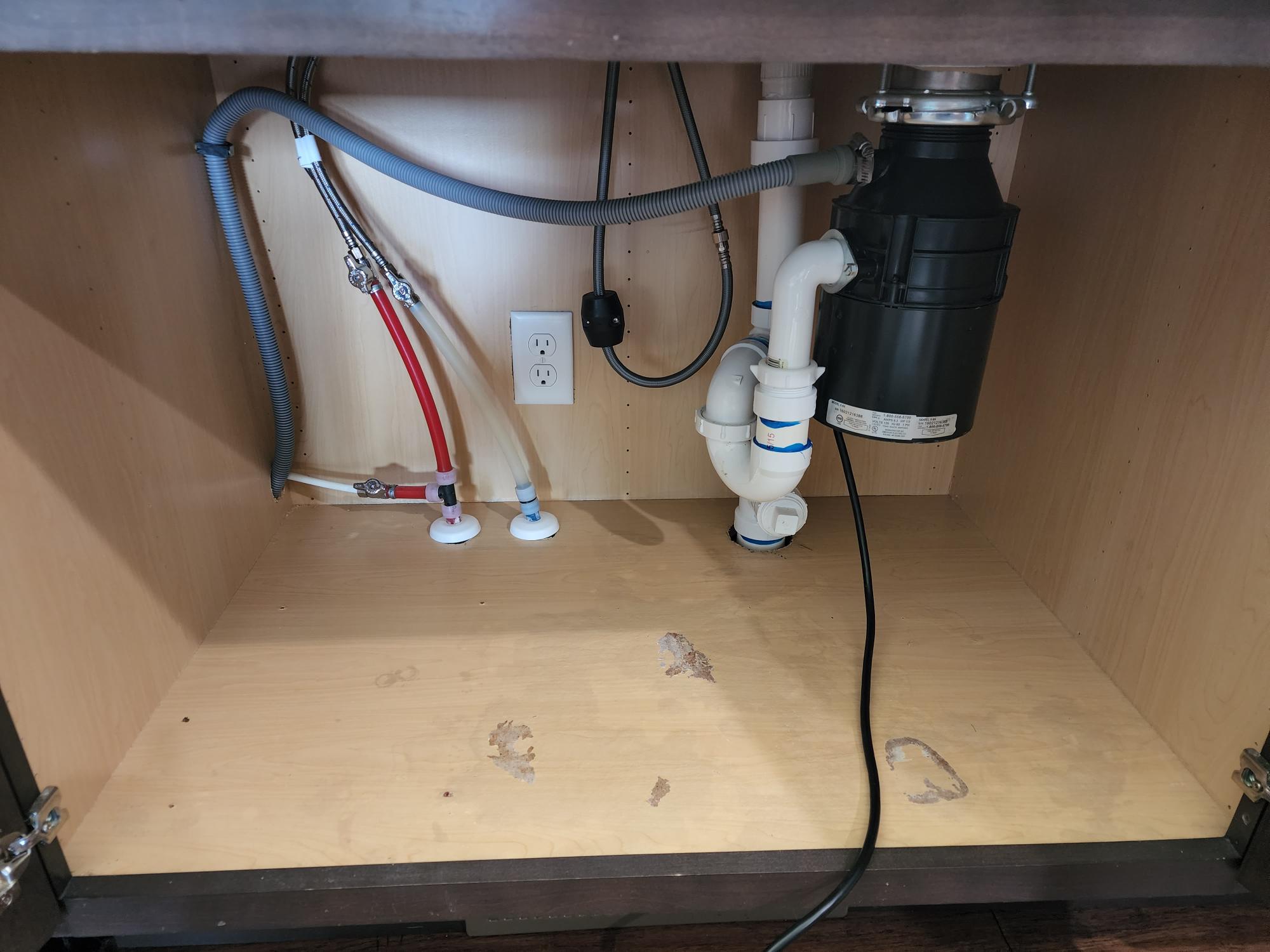
Restaurants, cafes and commercial kitchens leak in ways that homes never do, and a single wet patch can close a site for days. This guide explains why hospitality plumbing fails, what downtime really costs, and how targeted, non-disruptive detection finds the source without ripping the place apart.
A leak in a restaurant is never just a leak. It is a health inspection risk, a slip hazard, a damaged ceiling in the flat below, an argument with the landlord over who pays, and, in the worst cases, a closed front door on a Friday night. Hospitality premises put more water through more fittings, at higher temperatures and with more grease and food waste, than almost any other type of building in London. When something fails, it tends to fail expensively and it tends to fail at the worst possible moment.
This guide is written for the people who actually deal with the consequences: owners, operators, head chefs, facilities managers and the managing agents who look after mixed-use blocks with a kitchen on the ground floor. It explains why commercial kitchens and cafes leak, what a closure genuinely costs once you add it all up, why fast and non-disruptive detection matters so much in this sector, and how a proper survey protects you with insurers and landlords alike.
Why hospitality premises leak more than almost anything else
Domestic plumbing gets used in short bursts. A commercial kitchen runs hard for ten, twelve, sometimes eighteen hours a day, seven days a week. That intensity of use is the root cause of most of the problems we are called to. The water is hotter, the pressure cycles more often, and the drainage is carrying substances that no home ever produces in the same volume.
Heavy, continuous water use
Every joint, valve and flexible hose in a busy kitchen is worked far harder than its domestic equivalent. Compression fittings loosen with thermal cycling. Flexible tap connectors, the braided hoses under sinks and behind appliances, are one of the most common failure points in any building and they fail far faster where they are used constantly. A slow weep behind a stainless steel counter can run for weeks before anyone notices, quietly soaking a floor screed or tracking along a wall.
Grease-laden drains and blocked waste
Fats, oils and grease are the defining drainage problem of the sector. They cool, congeal and coat the inside of waste pipes, narrowing them until they block or back up. A grease-related blockage does not always announce itself at the gully. It can force water back through a joint, cause an overflow inside a duct or void, or push waste up through a floor drain in a completely different part of the building. Grease traps that are undersized or poorly maintained make this worse, and a failed trap can leak foul water directly into the floor structure.
Dishwashers, glasswashers and appliance connections
Commercial warewashers are plumbed to both hot and cold supplies and to a drain, and they run cycle after cycle all day. The fill solenoids, drain pumps, door seals and supply hoses are all wear items. A perished door seal or a hairline crack in a sump can release small amounts of water on every cycle, which is easy to mistake for splashing and hard to trace because it only happens when the machine runs. The same applies to combi ovens, ice machines, boiling-water taps and coffee machines, all of which have their own supply and drainage points.
Cellar cooling and refrigeration
Below-ground cellars and cold rooms bring two extra risks. Cellar cooling units and refrigeration systems produce condensate, which has to be drained away, and a blocked or displaced condensate line will happily pond water on a floor or drip into a void. Add the fact that many London cellars sit below the water table or under pavement vaults, and you have a setting where a genuine ingress problem and a simple condensate fault can look identical until someone investigates properly.
Flat roofs, plant and rainwater
A surprising number of kitchen leaks come from above rather than below. Extract canopies, ductwork penetrations and roof-mounted plant all create holes in the building envelope. Flat roofs over single-storey kitchen extensions are a classic weak point: ponding water, failed felt laps and blocked outlets let rain in, and because the water travels before it appears, the damp patch inside rarely sits under the actual defect.
The demise question: tenant versus landlord
In a leased premises, responsibility is split by the lease. The tenant usually maintains everything inside their demise, while the landlord looks after the structure, the roof and often the shared risers and drains. When a leak appears, the first fight is frequently about whose problem it is, and that argument stalls the repair while the damage grows. A clear, evidence-based survey that pinpoints the source is worth its weight here, because it turns a dispute into a documented fact.
The real cost of downtime and closure
The plumbing repair is rarely the expensive part. The expensive part is everything that stops while the repair happens. Understanding the true cost is what justifies paying for speed and precision rather than letting a general trade dig around hopefully.
| Cost area | What it actually means for a hospitality site |
|---|---|
| Lost covers and revenue | Every session closed is gross sales gone for good. A weekend closure can wipe out the margin for the week. |
| Spoiled stock | A refrigeration or power-related failure alongside a leak can spoil fresh and frozen stock that has to be binned. |
| Wages still due | Staff are often still paid even when the site cannot trade, so payroll runs against zero income. |
| Hygiene and compliance | Standing foul water or a contaminated floor can trigger a voluntary or enforced closure until the area is made safe and clean. |
| Reputation | Cancelled bookings, a shut door and negative reviews cost future covers, not just today's. |
| Reinstatement | Drying, replacing flooring, redecorating and re-fitting damaged joinery all add up long after the leak is fixed. |
When you set those numbers against the cost of a survey, the maths is stark. Spending on a fast, targeted investigation that keeps you open, or gets you open again quickly, is almost always cheaper than a day of lost trade. This is the point that experienced operators and managing agents make repeatedly on property and hospitality forums: the detection fee is trivial next to the closure it prevents.
Why non-disruptive detection matters more here than anywhere
In a home, if a plumber lifts a few floorboards to find a leak, it is an inconvenience. In a commercial kitchen, the floor is a sealed, graded, waterproofed system designed to meet hygiene standards, and breaking it open is a serious job in its own right. Tiled and screeded kitchen floors, coved skirtings and food-safe surfaces are expensive and time-consuming to reinstate. The last thing you want is a trade opening three wrong spots looking for the leak.
This is why a multi-method, evidence-first approach is the right one. Rather than guessing, a proper survey narrows the source down before anything is opened. The common techniques used across the trade include the following.
- Acoustic detection, using sensitive microphones to hear pressurised water escaping from a pipe, even under a solid floor.
- Thermal imaging, which reveals the temperature difference created by escaping hot or cold water and by damp spreading through a structure.
- Tracer gas, where a safe gas mixture is introduced into an isolated pipe and detected at the point it escapes, which is invaluable for pinpointing small or intermittent leaks.
- Moisture mapping and salts testing, to distinguish an active leak from historic damp or condensation.
- Drain cameras (CCTV), to inspect grease-affected and below-ground drainage from the inside and locate cracks, blockages and displaced joints.
- Pressure testing, to confirm whether a supply pipe is losing water and to verify a repair afterwards.
No single method finds every leak. The skill is in combining them, reading the building, and forming a conclusion that stands up when the floor is finally opened at one precise point rather than several. Our approach is exactly this: non-invasive leak detection across London using whichever combination of methods the situation demands, so the disruption to your premises is kept to the absolute minimum.
The flat below: leaks in mixed-use buildings
A very large share of London hospitality sits on the ground floor of a building with flats above, or occupies a basement beneath other occupiers. That geography creates a particular kind of problem: your leak becomes someone else's ceiling.
Water does not respect the boundary between commercial and residential. A failed waste connection in a kitchen can track through the floor slab and appear as a brown stain on the ceiling of the flat below, or a leak from a flat above can appear in your kitchen and be mistaken for your fault. Because water travels along joists, services and voids before it emerges, the visible damage is frequently a long way from the actual source, and often on the wrong side of a demise boundary.
These situations are where disputes get bitter and where a neutral, documented investigation earns its fee several times over. On community forums such as r/HousingUK and various property management groups, the same story appears again and again: a leak between a commercial unit and the flats above, both parties blaming the other, insurers refusing to move, and the whole thing stalling for months because nobody has actually established where the water is coming from. A survey that traces the source and states it plainly is what breaks that deadlock. This is precisely the kind of pinpointing that our trace and access service is built to deliver, locating the source with minimal opening up and providing the evidence needed to allocate responsibility.
Insurance and business interruption
Most commercial property and contents policies cover escape of water, and many hospitality policies include business interruption cover that can pay for lost income during a forced closure. In practice, though, insurers do not simply take your word for what happened. They want evidence: what leaked, why, when it started, whether it was sudden or gradual, and what was done to limit the damage.
This is where a professional detection report becomes a financial instrument rather than just a technical document. A clear report that identifies the source, dates the investigation, and describes the findings with images supports a claim and speeds up its settlement. It helps establish that the loss was sudden and accidental rather than the result of long-term neglect, which is often the deciding factor in whether a claim is paid. It also demonstrates that you acted promptly to mitigate the loss, a duty most policies place on the insured.
For managing agents handling a claim across a mixed-use block, an independent report is even more valuable, because it apportions cause between parties on evidence rather than assumption. We produce insurer-ready reports as standard, written to be understood by a loss adjuster and detailed enough to support a claim without a second visit.
Out-of-hours surveys: finding the leak without closing the doors
The single biggest fear for any operator facing a leak investigation is closing to trade. For many sites this is unnecessary. A leak detection survey can very often be carried out before service, after close, or overnight, so the disruptive part of the work happens while the premises would be shut anyway.
Working out of hours has practical detection advantages too. A quiet building is far better for acoustic work, because there is no kitchen noise masking the sound of an escaping pipe. Appliances can be isolated and run individually to reproduce an intermittent leak without a full service in progress. And any opening up that does prove necessary can be scheduled to be closed and made hygienic again before the doors open. For a 24-hour or seven-day operation, a coordinated overnight slot is usually the least damaging way to get to the bottom of the problem.
How we work with owners and managing agents
Hospitality clients need certainty on cost and timing as much as they need the leak found. Our model is built around that. We agree a fixed hourly rate at the point of booking, so the rate is settled before we travel and there is no surprise uplift at the end. We prioritise non-invasive methods and, where opening up is required, we keep it to the smallest possible area. We work out of hours where that protects your trading, and we provide a clear, insurer-ready report on every job.
For single-site owners, that means a straightforward, predictable service that gets you answers fast. For managing agents and multi-site operators, it means a consistent process across a portfolio, documented evidence to manage demise and insurance questions, and a single point of contact for buildings where a kitchen sits under flats. You can read more about our full commercial leak detection service in London, which covers restaurants, cafes, pubs, hotels, offices and mixed-use blocks across the capital.
What to do the moment you suspect a leak
Before help arrives, a few sensible steps limit the damage and protect any future claim.
- Isolate the supply to the affected area if you safely can, using the local stopcock or the appliance valve rather than shutting the whole building where possible.
- Keep staff and customers away from any wet floor and put down warning signage to manage the slip risk.
- Photograph everything, including the water, the damaged surfaces and any affected stock, with timestamps where you can.
- Do not rip up flooring or start opening walls yourself, as this can destroy the evidence a surveyor needs and can worsen the demise dispute.
- Note when it started and what was running at the time, as intermittent leaks tied to a specific appliance are much easier to trace with that information.
The general consensus among experienced operators is consistent and worth repeating: act fast, document everything, and get a proper investigation rather than guessing. A leak that is traced accurately in one visit costs a fraction of one that is chased around a building over weeks while the trade bleeds away. In a sector where a closed door on a busy night is the most expensive thing that can happen, precise, minimally disruptive detection is not a luxury. It is the cheapest insurance you can buy.
Frequently asked questions
Will you need to close my restaurant or kitchen to find the leak?
Usually not. Most leak detection surveys can be carried out before service, after close, or overnight, so the work happens while you would be shut anyway. A quiet building is also better for acoustic detection. If opening up proves necessary, we keep it to the smallest possible area and schedule it to be made clean and hygienic again before you open.
How much does commercial leak detection cost?
We agree a fixed hourly rate at the point of booking, so the rate is settled before we travel and there is no surprise uplift at the end. Typical UK trade cost-guide ranges for a professional leak detection survey generally start in the low hundreds of pounds and vary with the size of the site, the number of methods needed and whether the work is out of hours. Because the rate is fixed in advance, you know it before we start.
The leak is showing in the flat above or below my unit. Whose responsibility is it?
That depends on the lease and, crucially, on where the water is actually coming from. Water travels along voids and services before it appears, so the visible damage is often a long way from the source and sometimes on the wrong side of a demise boundary. An independent trace and access survey establishes the source on evidence, which is what settles the responsibility question between tenant, landlord and their insurers.
Can you provide a report for my insurance claim?
Yes. We produce an insurer-ready report on every job, identifying the source, dating the investigation and describing the findings with images. This supports an escape of water or business interruption claim, helps establish that the loss was sudden rather than gradual, and demonstrates that you acted to mitigate the damage, which is often the deciding factor in whether a claim is paid.
My dishwasher only seems to leak sometimes. Can you still find it?
Yes. Intermittent leaks tied to an appliance are common with dishwashers, glasswashers, ice machines and combi ovens. Out of hours we can isolate and run each machine individually to reproduce the fault, then use acoustic, thermal and tracer gas methods to pinpoint exactly where the water is escaping. Noting what was running when you saw the leak helps us trace it faster.
Do you work with managing agents across multiple sites?
Yes. We work with managing agents and multi-site operators across London, providing a consistent process, documented evidence for demise and insurance questions, and a single point of contact. This is particularly useful for mixed-use blocks where a kitchen sits beneath residential flats and cause needs to be apportioned fairly between parties.