Low Water Pressure in the House: Causes and How to Fix It
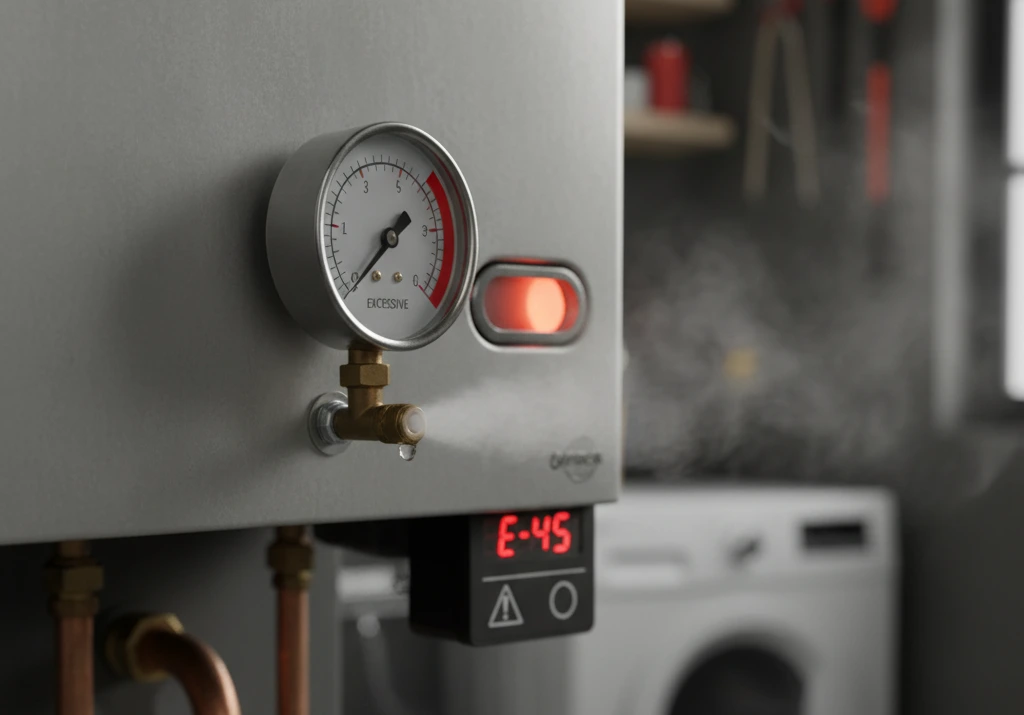
Weak flow at the taps is one of the most common household complaints in London. This guide walks through the real causes, how to work out whether the problem is one tap or the whole house, when low pressure quietly points to a hidden leak, and who to call.
Few plumbing problems are as quietly frustrating as low water pressure. The shower turns from a drench into a dribble, the kitchen tap takes an age to fill a kettle, and the washing machine seems to spend half its cycle waiting for water. In London the problem is especially common because so much of the housing stock is old, the mains network is under constant demand, and many homes still rely on Victorian-era supply pipes buried under gardens and pavements.
The good news is that a large share of low-pressure problems have simple, cheap explanations, and you can often work out what is going on before you pick up the phone. This guide explains the difference between whole-house and single-tap pressure loss, walks through the common causes, gives you a step-by-step way to diagnose the issue yourself, and, crucially, explains when weak pressure is actually the early warning sign of a hidden leak. It also sets out honestly when the sensible call is to your water company and when it is to a plumber.
Pressure vs flow: a quick word on terms
People say "low pressure" when they usually mean "not enough water coming out of the tap". Strictly, pressure is the force pushing the water, and flow is the volume that actually arrives per minute. The two are linked but not identical. A narrow, scaled-up pipe can strangle the flow even when the underlying pressure is fine, and a partially closed valve does the same. For everyday diagnosis you do not need to obsess over the distinction, but it is worth remembering that the fix is often about removing a restriction rather than somehow adding more force.
The first question: one tap or the whole house?
This single question narrows the problem down more than anything else, so start here before you do anything else.
Walk round the property and test the cold tap at every outlet: kitchen, bathroom basin, bath, shower, any outside tap, and the utility room if you have one. Note whether the weakness is everywhere or isolated to one or two fittings. The kitchen cold tap matters most because in most UK homes it is fed directly from the incoming mains, so it is the truest reading of the pressure entering your property.
If it is just one tap or one fitting
The problem is almost always local to that outlet, and the cause is usually cheap and easy. Think blocked aerators, a clogged shower head, a partially closed isolation valve under the sink, or a kinked flexible tap connector. You do not have a supply problem; you have a fitting problem.
If it is the whole house
Now you are looking at something between your mains stop tap and the street, or a problem with the incoming supply itself. This is where causes such as a partly closed stop tap, a faulty pressure-reducing valve, shared-supply demand, or a hidden underground leak come into play. Whole-house low pressure is the pattern that deserves the most attention, because it is the one most likely to point at a leak or a supply fault.
Common causes of low water pressure
Below are the causes that come up again and again, roughly in the order it makes sense to check them.
1. A partially closed stop tap
Your internal stop tap (usually under the kitchen sink, sometimes in a downstairs cupboard or hallway) controls all the water entering the house. If it has been turned off for a repair and only opened part-way afterwards, or if an older tap has seized somewhere in the middle, it will throttle the whole supply. This is the single most common and most overlooked cause. Turn it fully anticlockwise to open, then, if it is very stiff, back it a quarter-turn to stop it seizing again. There is often an outside stop tap too, near the boundary, which can be the culprit if works have recently been done in the street.
2. Blocked aerators, filters and shower heads
The little mesh screen on the end of a tap (the aerator) traps grit and limescale, and London's hard water makes this happen faster than in soft-water areas. A furred-up shower head does the same. These are the classic single-tap causes and the cheapest to fix: unscrew, soak in descaler or white vinegar, rinse and refit.
3. A faulty pressure-reducing valve (PRV)
Some homes, particularly newer builds and flats, have a pressure-reducing valve fitted to protect the plumbing from very high mains pressure. If the PRV fails or drifts out of adjustment, it can choke the whole supply. A failing PRV is a common cause of a house that gradually loses pressure over months for no obvious reason. It is a plumber's job to test and replace.
4. Shared supply and peak-time demand
Many London properties, especially conversions and terraces, share a single supply pipe from the main. When neighbours are showering, filling baths or running washing machines at the same time as you, everyone's pressure drops. If your weak pressure is worst first thing in the morning and in the early evening, and better late at night, shared demand is a likely explanation and there may be nothing wrong with your plumbing at all.
5. Airlocks
An airlock is a pocket of trapped air in the pipework, most common after the supply has been drained down for work, or in gravity-fed hot systems. It typically affects hot water more than cold, and often just one or two taps. Spluttering, inconsistent flow is the tell-tale sign. Airlocks can sometimes be cleared by connecting a hose between a good-pressure tap and the affected one, but persistent airlocks point to a system design issue worth a plumber's eye.
6. Scale and corrosion in old pipes
Older London homes often still have galvanised steel or lead sections in the supply. Over decades these fur up internally with scale and rust, narrowing the bore until flow is badly restricted. The classic symptom is a house where pressure has slowly declined over years and no single fix helps. The real remedy is replacing the affected pipe run, which is a larger job but often transformative.
7. A hidden supply-pipe leak
This is the cause that matters most, because it is the one that quietly costs money and damage. The supply pipe running underground from the boundary to your house is your responsibility, and if it develops a leak, water escapes before it ever reaches your taps. The result is a steady, unexplained drop in whole-house pressure. We look at the warning signs in detail below.
8. Water company supply issues
Sometimes the problem is genuinely not yours. Planned works, a burst main, or maintenance in your area can lower pressure across a whole street. These issues are usually temporary and affect neighbours too, which is exactly why comparing notes next door is such a useful diagnostic step.
Cause, symptom and fix at a glance
| Cause | Typical symptom | Usual fix |
|---|---|---|
| Partially closed stop tap | Whole house weak, often after recent plumbing work | Open the internal (and outside) stop tap fully |
| Blocked aerator / shower head | One tap or shower weak, others fine | Unscrew, descale, rinse and refit |
| Clogged isolation valve | Single fitting weak (e.g. basin cold) | Open or replace the under-sink isolation valve |
| Faulty pressure-reducing valve | Whole house declines gradually over months | Plumber tests and replaces the PRV |
| Shared supply demand | Weak at morning and evening peaks, fine late at night | Storage/pump options, or accept and reschedule use |
| Airlock | Spluttering flow, usually hot water, after a drain-down | Clear the airlock; investigate if it recurs |
| Scale in old pipes | Slow decline over years, no single fix helps | Replace the affected pipe run |
| Hidden supply-pipe leak | Unexplained whole-house drop, meter creeps, damp patches | Non-invasive leak detection, then targeted repair |
| Water company supply issue | Whole street affected, temporary | Report to water company; wait for resolution |
How to diagnose it step by step
Work through these in order. Most people find their answer within the first few steps.
- Test every tap. Establish whether the problem is one fitting or the whole house. This decides everything that follows.
- Check the timing. Note whether it is constant or worse at peak times. Peak-only weakness points to shared demand or a supply issue rather than a fault in your pipes.
- Ask the neighbours. If they have the same problem, the cause is upstream of your home, meaning the water company's network or a shared supply.
- Check the stop taps. Make sure the internal stop tap is fully open, and the outside one too if you can access it. This is free and fixes a surprising number of cases.
- Clean the aerators and shower head. If the problem is a single fitting, descaling usually solves it in minutes.
- Do a simple meter test for leaks. Turn off every tap and water-using appliance, then read your water meter. Wait 30 to 60 minutes without using any water and read it again. If the meter has moved with everything off, water is escaping somewhere, and a hidden leak moves to the top of your list.
- Look and listen for damp. Check for unexplained damp patches, a boiler losing pressure, the sound of running water when everything is off, or a patch of lawn that stays green and lush in dry weather.
When low pressure is really a leak
This is the part worth slowing down for. A hidden leak on your underground supply pipe rarely announces itself with a dramatic flood. Instead it shows up as a gradual, unexplained loss of pressure across the whole house, because water is bleeding out of the pipe before it reaches you. The warning signs to take seriously are:
- Whole-house pressure that has dropped with no obvious cause and does not recover.
- A water meter that keeps ticking over even when every tap and appliance is off.
- Water bills creeping up without any change in how much you use.
- Damp patches, a musty smell, or an area of ground or paving that is always wet.
- The sound of running or trickling water in walls or under floors when the house is quiet.
If two or more of these ring true, treat it as a suspected leak rather than a simple pressure niggle. The honest position among tradespeople and on forums such as r/DIYUK, r/HousingUK and the MoneySavingExpert boards is consistent: chasing a hidden leak by digging speculatively is expensive and destructive, and the sensible modern approach is to locate it accurately first. That is exactly what non-invasive detection is for, using acoustic and thermal methods to pinpoint the leak before anyone lifts a slab or a floorboard. Our underground water leak detection in London service is built around finding the problem with the least disruption possible, and our wider leak detection in London page explains how the process works. If water is actively causing damage and you need someone out fast, our emergency plumber in London team can attend.
When to call the water company vs a plumber
Getting this right saves you both time and money, because the two handle very different parts of the system.
Call the water company when
- Your neighbours have low pressure at the same time, suggesting a network issue.
- The drop coincides with known works or a burst main in your area.
- You suspect a fault on the water main in the street, before the boundary.
- You simply want to confirm whether the incoming supply pressure meets the minimum standard they are obliged to provide.
Call a plumber when
- The problem is confined to your property and your neighbours are fine.
- You suspect a faulty pressure-reducing valve, an airlock that keeps returning, or scaled-up internal pipework.
- Your meter test suggests a hidden leak on your side of the boundary.
- You want a proper diagnosis rather than guessing, particularly before committing to any digging or pipe replacement.
As a rule of thumb, everything from the boundary stop tap into your home is your responsibility, and the water main in the street is theirs. The supply pipe under your own garden or driveway is yours, which is why supply-pipe leaks land with a plumber rather than the water company.
What it typically costs
Prices vary across London by property, access and severity, so treat these as typical UK trade cost-guide ranges rather than fixed quotes. Descaling aerators and shower heads is essentially free if you do it yourself. A plumber's call-out to diagnose and fix a stop tap, isolation valve or airlock is usually a modest single-visit charge. Testing and replacing a pressure-reducing valve is a larger but still contained job. Professional leak detection is priced as a survey, and its value is that it replaces expensive, destructive guesswork with a precise location, so any repair or excavation is as small and targeted as possible. We are upfront about pricing and will always explain what a job involves before we start, so there are no surprises on the day.
The honest bottom line
Most low-pressure problems in London homes are not emergencies and are not expensive. Start by working out whether it is one tap or the whole house, check the stop taps and clean the aerators, and compare notes with your neighbours. Do the simple meter test. If everything points to a single fitting, you can very often fix it yourself in an afternoon. But if the whole house has quietly lost pressure, the meter keeps moving with the taps off, or damp is appearing, take it seriously as a possible hidden leak and get it located properly before anyone starts digging. Honest diagnosis first, non-invasive detection if a leak is suspected, and a targeted fix: that is how you solve low pressure without paying for damage you did not need to cause.
Frequently asked questions
Why does only my hot water have low pressure?
If the cold flows well but the hot is weak, the cause is usually within your hot system rather than the incoming supply. Common culprits are an airlock in the hot pipework, a scaled-up hot water outlet, or, in gravity-fed systems, a low or restricted cold water storage tank in the loft. Because it points at the internal system rather than the mains, this is generally a plumber's job rather than a water company one.
How can I tell if low pressure is caused by a leak?
Do a meter test. Turn off every tap and water-using appliance, read your water meter, then wait 30 to 60 minutes without using any water and read it again. If the meter has moved with everything off, water is escaping somewhere. Combine that with warning signs such as unexplained damp, rising bills, or the sound of running water when the house is quiet, and a hidden supply-pipe leak becomes likely. At that point, accurate non-invasive detection is the sensible next step before any digging.
Is low water pressure the water company's fault or mine?
It depends where the problem sits. The water main in the street is the water company's responsibility, so if your neighbours are affected at the same time or there are known works nearby, contact them. Everything from the boundary into your home, including the supply pipe under your own garden or driveway, is your responsibility, so faults there are a plumber's job. If only your property is affected and your neighbours are fine, the problem is almost certainly on your side.
Can I fix low water pressure myself?
Often, yes, if it is a single-tap or simple whole-house cause. Check that your internal stop tap is fully open, unscrew and descale the aerators and shower head, and make sure under-sink isolation valves are open. These cost little or nothing and resolve a large share of cases. If the whole house is weak with no obvious cause, the pressure has declined gradually over months or years, or your meter test suggests a leak, it is worth getting a professional diagnosis rather than guessing.
Why is my water pressure worse in the morning and evening?
That pattern usually points to shared-supply demand. Many London properties, especially conversions and terraces, share a supply pipe, and when several households draw water at the same peak times the pressure drops for everyone. If your pressure is fine late at night and only weak at busy times, there may be nothing wrong with your plumbing. Options include storage or pumped solutions, but for many households simply rescheduling heavy water use is enough.
Does London's hard water cause low pressure?
Indirectly, yes. London's hard water leaves limescale that clogs aerators and shower heads quickly, and over many years it contributes to scale building up inside older pipework, narrowing the bore and restricting flow. Regular descaling of taps and shower heads keeps the quick problems at bay. Where old galvanised or lead pipe runs have furred up internally, the lasting fix is usually to replace the affected section.