Frozen Pipes: How to Prevent Them and Thaw Them Without a Burst
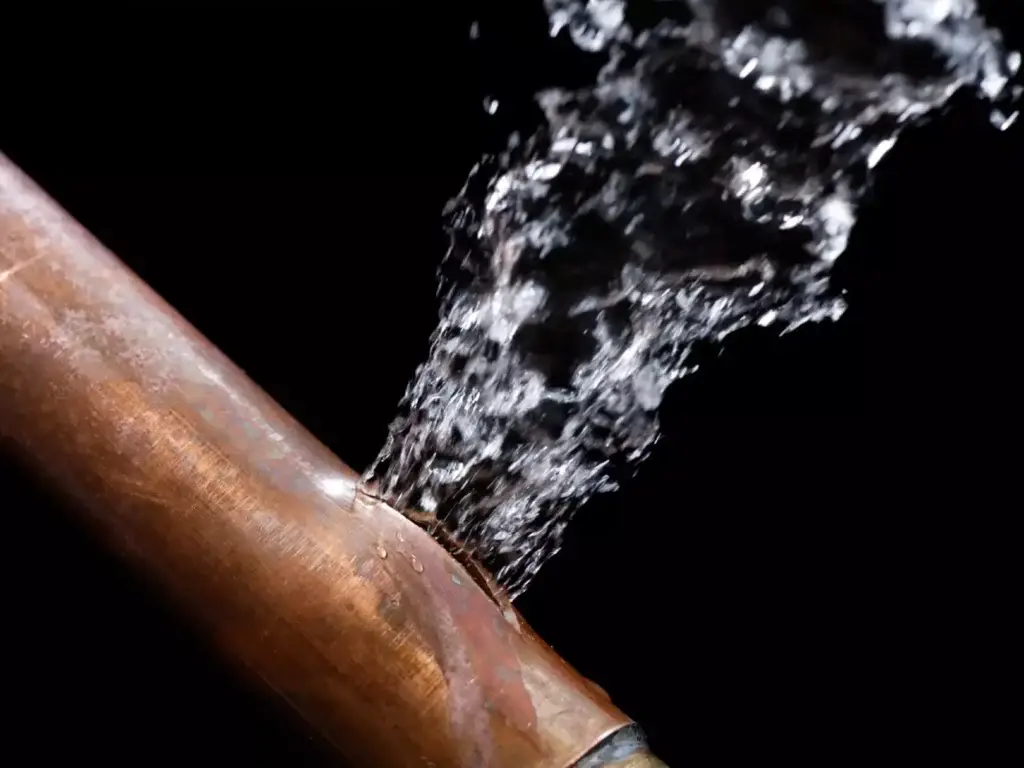
Frozen pipes rarely leak while frozen — the flood starts with the thaw. Learn why pipes really burst, how to protect London's usual weak spots for a few pounds, and how to thaw a pipe safely without starting the flood yourself.
Frozen pipes are one of the few plumbing emergencies you can see coming. The forecast drops below zero, and somewhere in your home a pipe full of still water starts turning to ice. Whether you escape with a temporary loss of flow or come home to a ceiling on the floor depends on what you do before, during and after the freeze. This guide explains why frozen pipes actually burst (not what most people think), where London homes are vulnerable, how to prevent freezes cheaply, and how to thaw a pipe without turning a nuisance into an insurance claim.
Why frozen pipes burst: it's the pressure, not the ice
The common mental picture is ice swelling inside the pipe and splitting it open like a frozen bottle. The truth is slightly different, and it changes how you thaw a pipe safely.
Water expands by roughly 9% when it freezes, but copper and plastic pipe can often tolerate the ice plug itself. What actually ruptures the pipe is the trapped water between the ice and a closed tap. As the plug grows, it pushes liquid water towards the tap, and because water is almost incompressible, the pressure in that sealed section climbs dramatically until something gives. The split frequently appears downstream of the blockage, at a point with little or no ice at all.
This explains why a pipe can burst in a warm-ish part of the house when the freeze happened in the loft, and why the classic "dripping tap" trick works — an open tap gives that trapped water somewhere to go, relieving the pressure even if the pipe freezes solid.
It also explains the cruellest part: a frozen pipe often does not leak while frozen, because the ice plug seals its own damage. The flood starts with the thaw — which is why the hours after a cold snap ends are the busiest of the year for any emergency plumber in London.
Where pipes freeze in London homes
London rarely sees sustained deep cold, which is precisely the problem: pipework here is often poorly protected because freezes are treated as rare. When a proper cold snap arrives — a run of nights at -3°C to -6°C, as parts of the capital saw in December 2022 — the same weak points fail street after street.
| Risk spot | Why it freezes | Typical failure |
|---|---|---|
| Loft pipework and tanks | Modern loft insulation keeps house heat out of the loft, so it can sit close to outside temperature | Split feed to cold water tank; ceiling collapse below when it thaws |
| Outside taps | Fully exposed; short spur holds still water | Split spur inside the wall — often unnoticed until spring |
| Garages and outbuildings | Unheated, single-skin walls | Burst washing machine feeds and garden supplies |
| Pipes on external walls | Common in Victorian terraces and post-war conversions where kitchens and bathrooms were added against outside walls | Frozen kitchen cold feed; burst behind units |
| Boiler condensate pipe | Small-bore plastic pipe running outside to a drain | Boiler locks out in the coldest weather — no heating exactly when you need it |
| Under suspended timber floors | Airbricks ventilate cold air directly under ground-floor pipework | Hidden burst under the floor, spotted via a spinning meter or damp |
Flats are not immune: communal risers in unheated stairwells, pipework in underground car parks and long condensate runs down external walls all freeze regularly — and in a converted terrace, a burst in your neighbour's loft can end up in your ceiling.
How to prevent frozen pipes: cheap insurance
Almost everything here costs less than a takeaway. For comparison, Checkatrade's 2026 cost guide puts a straightforward burst pipe repair at around £220–£440 before any water damage, and the ABI has noted a freezing-weather burst pipe claim can reach roughly £7,500 once drying and reinstatement are included.
| Prevention measure | Typical DIY cost (2026) | Effort |
|---|---|---|
| Foam pipe lagging (per metre) | £1–£3 | Push-fit, minutes per run |
| Outside tap insulation cover | £3–£8 | Under a minute |
| Insulating the condensate pipe (external-grade lagging) | £5–£15 | 15 minutes |
| Heating on low during a cold snap (12–15°C) | A few pounds per day | One thermostat change |
| Isolating and draining the outside tap | Free (if isolation valve fitted) | Two minutes each autumn |
Lag the vulnerable runs
Prioritise the loft, then pipework in garages, under floors and on external walls. Use lagging that fits the pipe snugly and tape the joints — gaps at elbows and valves are exactly where freezes start. Insulate the loft cold water tank on its sides and top, but leave the area directly beneath it clear so house heat can rise and keep it above freezing.
Keep the heating on low — especially if you go away
During freezing weather, run the heating continuously at a low setpoint rather than in short bursts. Most insurers expect a minimum of around 12°C if the property is left unoccupied in winter, and some policies make this a condition of escape-of-water cover — check your wording before you travel. Away for more than a few days in a cold spell? Either leave the heating on low or turn off the stop tap and drain the system. Opening the loft hatch and under-sink cupboard doors lets warm air reach pipework in cold pockets.
The dripping tap trick
On nights forecast well below zero, leave the tap furthest from your stop tap — or one fed by a known vulnerable run — trickling very slightly. Moving water freezes far less readily, and crucially the open tap prevents the pressure build-up that actually bursts pipes. Treat it as a one-night emergency measure for exceptional cold, and if the tap drains to an external waste pipe, watch that the waste itself does not ice up.
Deal with the outside tap properly
The outside tap is London's most common freeze casualty because the split usually happens on the spur inside the wall and stays hidden until spring. If there is an isolation valve on the spur (usually under the kitchen sink), close it in late autumn, then open the outside tap to drain the trapped water and leave it open. No isolation valve? A foam tap cover is the fallback — better than nothing, but fitting a valve is a small job worth doing.
How to tell a pipe has frozen
- One tap (or one part of the house) has no flow or a weak dribble while others work normally.
- The toilet cistern will not refill.
- The boiler locks out with a fault code in freezing weather (see the condensate section below).
- Visible frost, ice or a slight bulge on an exposed pipe.
- Gurgling or odd noises when you open a tap.
Trace the dead run from the tap backwards towards the coldest place it passes through — almost always a loft, an external wall, or outside.
How to thaw a frozen pipe without bursting it
Thawing is where most self-inflicted damage happens. The golden rules: gentle heat, open tap, be ready for a leak.
- Find your stop tap first. Before applying any heat, know exactly how to shut the water off — if the thaw reveals a split, you will have seconds, not minutes. Our guide to finding and turning off your stop tap covers the usual London locations.
- Open the affected tap. This relieves pressure between the ice and the tap and gives meltwater somewhere to go. Returning flow tells you it is working.
- Inspect the pipe before heating it. If you can see a split, bulge or ice forced out of a joint, stop — keep the water off and get a plumber. Thawing a split pipe just starts the flood on your schedule.
- Apply gentle heat, starting at the tap end. Work from the tap backwards towards the frozen section, so melting water can escape rather than being trapped against the plug. Use a hair dryer on low, kept moving along the pipe; towels soaked in warm water and re-warmed as they cool; or a hot water bottle held against the pipe.
- Never use a blowtorch, heat gun or naked flame. Direct flame can melt solder joints, ignite dust and timber in a loft, and turn trapped water to steam with enough pressure to rupture the pipe violently. Do not switch on the immersion heater or boiler to force-thaw a frozen hot water system either — heating water that cannot circulate is dangerous.
- Be patient. A short frozen section can take 30–60 minutes of gentle heat; a long loft run can take hours. Keep checking the whole run for weeping joints as it thaws, not just the spot you are heating.
If you cannot reach the frozen section — under a floor, inside a wall, behind fitted units — do not start dismantling your home on a guess. Professional thermal imaging locates frozen and burst sections through walls and floors, so any opening-up is surgical rather than exploratory.
Frozen boiler condensate pipe: the fix that gets your heating back
If your condensing boiler shuts down on the coldest morning of the year with a gurgling noise and a fault code (check your manual — EA on many Worcester Bosch models, for example), the most likely culprit is not the boiler at all. It is the condensate pipe: the small white plastic pipe that carries slightly acidic wastewater from the boiler to a drain, often down an outside wall. Being small-bore and slow-flowing, it freezes readily; the boiler detects the blockage and locks out for safety.
The fix is a ten-minute DIY job:
- Locate the frozen section — usually the outdoor run, most often at the open end near the drain or at an elbow.
- Pour warm water — hot to the touch but never boiling, around 60°C — along the pipe from the top of the frozen section downwards. Boiling water can crack the plastic and turns to ice around your feet.
- Alternatively, hold a hot water bottle or warm damp cloths against the pipe.
- Once thawed, reset the boiler per the manual and check it fires normally.
To stop it recurring, fit external-grade (waterproof) lagging to the outdoor run; if it freezes every winter, ask a heating engineer about re-routing it internally or increasing its fall and diameter. If the boiler still misbehaves after thawing — repeated lockouts, or pressure dropping on the gauge — you may have a separate issue; our guide to boiler pressure loss causes and fixes explains what falling pressure usually means.
What homeowners report on Reddit and forums
Reading through UK DIY and money-saving communities after each cold snap, the same patterns recur. The most common regret is thawing too aggressively: people describe getting flow back with a heat gun or by cranking the heating, only for a joint to let go an hour later once the ice that had been sealing the split melted. The second recurring story is the outside tap discovered in April — the freeze split the pipe inside the wall in January, and the leak only appeared when the tap was first used for the garden.
On prevention, forum consensus matches insurer advice: heating left at a steady 10–12°C while away is cheap compared with the alternative, and several posters describe insurers scrutinising whether the heating was left on before paying escape-of-water claims on unoccupied homes. Landlords managing winter voids often recommend draining the system entirely. And the single most repeated tip is the least glamorous: check your stop tap actually turns before the emergency, because seized stop taps feature in a remarkable number of flood stories.
The thaw reveals a split: what to do in the first ten minutes
If water escapes as a pipe thaws — anything from a weeping joint to a full spray — act in this order:
- Turn off the stop tap to stop more water entering the property. If the burst is on the heating or hot water system, switch off the boiler and immersion heater too.
- Open cold taps to drain the pipework and take pressure off the split, filling a couple of containers for drinking and flushing first.
- Kill electrics in affected areas at the consumer unit if water is near sockets, lights or appliances.
- Contain and photograph. Buckets and towels under the leak; photos and video as it happens — your insurer will want them.
- Call for help. A visible burst needs an emergency plumber; water with no visible source needs leak detection first, so the repair opens up the right spot.
We cover the full sequence, including what insurers expect from you, in our guide to what to do first when a pipe bursts. One insurance point is worth repeating: buildings insurance generally covers the damage the water causes, and most policies include trace and access cover for finding a hidden leak — but the pipe repair itself often is not covered. According to the ABI, insurers pay out around £1.8 million every day for escape-of-water damage, and freeze-related claims are among the most expensive because the water often runs unnoticed while the property is empty.
When to call in professionals — and what it costs
Call for professional help rather than persisting when:
- The frozen or burst section is inaccessible — under floors, inside walls or ceilings, or underground.
- Water is appearing after the thaw but you cannot find the source.
- Multiple areas of the house lost flow, suggesting several frozen sections.
- The property is tenanted, unoccupied, or a flat where a leak may involve neighbours — you will need documentation.
For hidden freeze damage, burst pipe repair starts with finding the split precisely. We use thermal imaging, acoustic listening and tracer gas to locate bursts non-destructively across all 32 London boroughs, with a fixed hourly detection rate agreed at booking — typically £340–£680 in total — and a genuine no find, no fee promise. Any repair is quoted before work starts. If you are claiming, we provide insurer-ready trace and access reports within 48 hours, documenting the leak location, cause and access work — the paperwork most insurers ask for before paying out on a freeze-related escape of water.
If a cold snap has left you with no water, no heating, or a damp patch spreading as the thaw sets in, do not wait to see whether it gets worse — freeze damage almost always does. Get in touch with what happened and where the water is showing, and we will tell you honestly whether it is a DIY thaw, a straightforward repair, or a job for professional leak detection.
Frequently asked questions
Why do pipes burst when they freeze?
Water expands by around 9% as it freezes, but the ice plug itself rarely splits the pipe. The real cause is pressure: the growing plug pushes liquid water towards a closed tap, and because water is almost incompressible, pressure in that sealed section rises until the pipe ruptures — often at a point with no ice at all. Leaving the affected tap open relieves this pressure, which is why the dripping tap trick genuinely helps.
How do you thaw a frozen pipe safely?
Open the affected tap first, check the pipe for splits or bulges, then apply gentle heat starting at the tap end and working back towards the frozen section. Use a hair dryer on low, warm wet towels or a hot water bottle. Never use a blowtorch, heat gun or naked flame, and never switch on the boiler or immersion heater to force-thaw a frozen system. Know where your stop tap is before you start, in case the thaw reveals a split.
Should I leave my heating on to stop pipes freezing?
Yes, during freezing weather run the heating continuously on a low setting rather than in short bursts. Most insurers expect a minimum of around 12°C if the home is unoccupied in winter, and some make this a condition of escape-of-water cover. If you are away for more than a few days in a cold spell, either leave the heating on low or turn off the stop tap and drain the system, and open the loft hatch so warm air reaches loft pipework.
How do I fix a frozen boiler condensate pipe?
Find the frozen section of the white plastic pipe running from the boiler to an outside drain — usually at the open end or an elbow. Pour warm water, hot to the touch but never boiling (around 60°C), along the pipe from the top down, or hold a hot water bottle against it. Once thawed, reset the boiler and check it fires normally. Fit external-grade lagging afterwards to stop it freezing again.
Does home insurance cover a burst pipe from freezing?
Buildings insurance generally covers the damage escaping water causes — floors, walls, ceilings — and most policies include trace and access cover for the cost of finding a hidden leak. However, the repair of the pipe itself often is not covered. Insurers may also check that you kept the heating on if the property was unoccupied, so read your policy conditions before travelling in winter and keep photos and reports of any damage.
How much does it cost to repair a burst pipe in London?
A straightforward, accessible burst pipe repair typically costs around £220–£440 according to Checkatrade's 2026 cost guide, with emergency call-outs charged on top by many firms. Hidden bursts cost more because the leak must be located first: professional leak detection with a fixed fee typically runs £250–£450, and the ABI notes a freezing-weather burst claim can reach roughly £7,500 once drying and reinstatement are included.