How to Prevent Water Leaks at Home: A London Homeowner's Guide
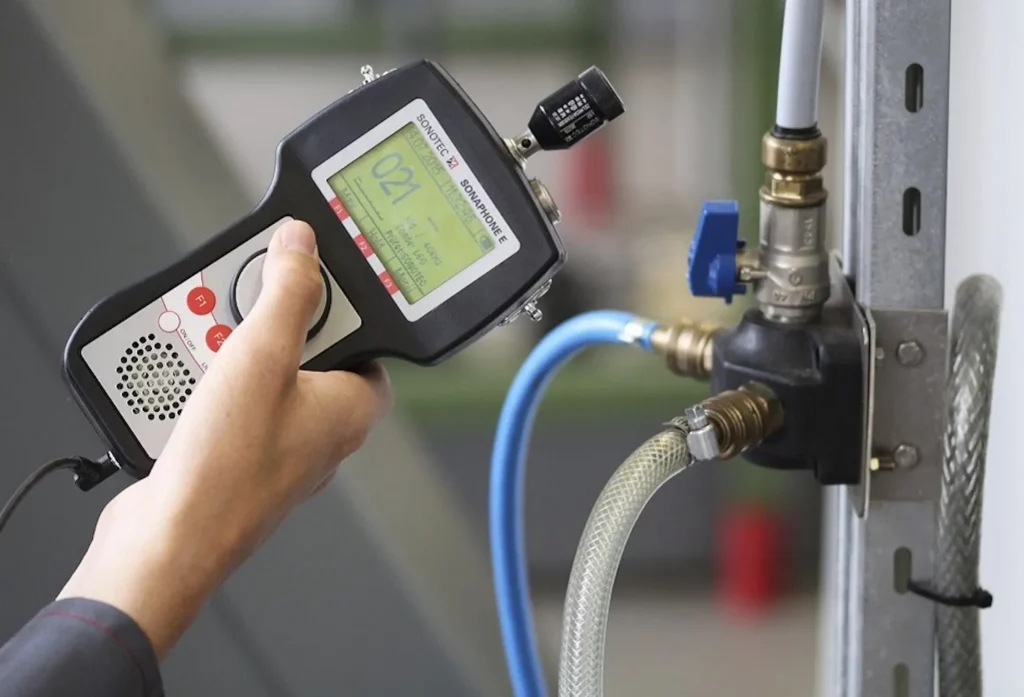
Most home water leaks are avoidable. This guide walks London homeowners through the checks that matter most, from the stopcock and water meter to flexi-hoses, sealant, radiators and winter frost, so you can catch problems while they are still cheap to fix.
Most of the water damage we see across London does not start with a burst main or a dramatic ceiling collapse. It starts small: a weeping joint under a sink, a perished flexible hose behind a washing machine, a bath seal that has quietly given up. Left alone for weeks or months, those small problems turn into stained ceilings, ruined flooring, damp walls and insurance claims that could have been avoided.
The good news is that leak prevention is not complicated, and very little of it requires a tradesperson or a shop-bought water leak detector. If you understand a handful of pressure points in a typical home and check them on a sensible schedule, you dramatically cut your risk of a flood. This guide covers the checks that genuinely matter for a London property, why they matter, and the honest warning signs that mean it is time to stop watching and act.
Start With the Two Things Every Homeowner Should Know
Before any prevention routine, there are two fundamentals that everyone in the household should understand. In an emergency they save you thousands, and in day-to-day life they are your early-warning system.
1. Know where your stopcock is and that it actually works
The internal stopcock (or stop tap) is the valve that shuts off the mains water supply to your home. In older London terraces and flats it is most commonly found under the kitchen sink, but it can also live in a downstairs cloakroom, an airing cupboard, under the stairs, in a utility area, or near the front door. There is usually a separate external stop tap at the boundary of the property, often under a small metal cover in the pavement or front garden.
Two things trip people up. First, they do not know where the stopcock is until water is already coming through the ceiling. Second, they find it, try to turn it, and discover it is seized solid because it has not been moved in ten years. A stopcock that will not turn is useless in an emergency. Test yours now: turn it fully off, check the flow stops at a tap, then turn it back on. If it is stiff, seized, or weeps once moved, that is a job worth sorting before you need it. Our step-by-step walkthrough covers this in detail at how to turn off your water stop tap in London.
2. Use your water meter as a water leak detector
Your water meter is the single best leak-detection tool you already own, and it costs nothing to use. The method is simple. Turn off every water-using appliance and tap in the house. Note the meter reading, ideally the final small dials or the sweep hand that measures fine usage. Wait one to two hours without using any water, then read it again. If the numbers have moved with everything switched off, water is escaping somewhere. This is one of the most reliable DIY checks discussed on home-maintenance forums, and it works precisely because it does not rely on you seeing or hearing the leak.
The Prevention Checklist: What to Check and How Often
A leak-prevention routine does not need to be constant. Most of it is a few minutes every few months, plus a proper look once a year. Here is a realistic schedule for a typical London home.
| Area | What to check | How often |
|---|---|---|
| Stopcock / stop tap | Turns freely, shuts off flow, no weeping | Every 3-6 months |
| Water meter | No movement with all water off | Every 3 months |
| Under-sink pipework | Dry joints, no green corrosion, no damp cupboard base | Monthly (quick look) |
| Flexible tap hoses | No kinks, rust, bulging or damp; age of hose | Every 6 months |
| Washing machine / dishwasher hoses | No cracking or weeping at connections | Every 6 months |
| Bath, shower and basin sealant | No gaps, mould lines, or lifting silicone | Every 6 months |
| Radiators and valves | No damp patches, rust streaks or drips at valves | Every 6 months |
| Water pressure | Consistent, not hammering or spiking | Ongoing / if it changes |
| Loft and exposed pipes (frost risk) | Lagging intact, no exposed runs | Before winter |
| Visible ceilings and walls | No new stains, bubbling paint or musty smell | Ongoing |
Visible Pipework and Joints
You cannot inspect the pipes buried in walls and under floors without equipment, but you can watch the ones you can see, and those account for a large share of household leaks. The usual suspects are under kitchen and bathroom sinks, around the boiler, at isolation valves, and anywhere two pipes join.
Once a month, open the cupboards under your sinks and have a proper look. You are checking for: damp or water-stained cupboard bases, a musty smell, green or white crusty deposits on copper (a sign of a slow weep), and any glistening of moisture at compression joints. Run a dry tissue around each joint; if it comes away damp, you have found a weep. Catching a joint at the weep stage usually means a minor tightening or a new olive or washer, rather than a soaked kitchen floor and a replacement cupboard carcass later.
Flexible hoses: the leak everyone underestimates
If there is one component that home-maintenance communities return to again and again, it is the flexible braided hose, the short silver-sleeved connectors used on taps, mixer taps and some appliances. They are cheap, convenient, and they have a finite lifespan. The rubber inner tube perishes and the braided sleeve can corrode or split, and because these hoses are often tucked inside a vanity unit or behind a pedestal, a failure can go unnoticed until it is a full-blown flood. Flexi-hose failure is repeatedly cited in DIY and home-maintenance discussions as one of the most common causes of serious indoor water damage precisely because it is hidden, sudden, and under mains pressure.
Treat flexible hoses as consumable parts, not permanent fittings. Every six months, look for rust spots on the braid, bulging, kinks, and any dampness at the connections. Many people choose to replace them proactively around every five to eight years rather than wait for a failure, and quality hoses with a longer warranty are worth the small extra cost. As a typical UK trade cost-guide range, replacing a pair of flexible tap connectors is usually a modest job in the region of £80 to £150 including labour, which is trivial against the cost of drying out and reinstating a bathroom floor.
Washing machine and dishwasher hoses
Appliance fill and drain hoses live under constant or repeated pressure and take a lot of movement over the years. Check behind and under the washing machine and dishwasher twice a year for cracking, perishing, or weeping at the connection points, and make sure the hose is not crushed against the wall when the appliance is pushed back. When you buy a new machine, it is worth fitting fresh hoses rather than reusing tired ones, and if your appliance sits on a wooden floor upstairs, a simple drip tray gives you an extra margin of safety.
Sealant Around Baths, Showers and Basins
Silicone sealant is the unglamorous hero of a dry bathroom, and it is the thing most homeowners ignore until the ceiling below starts to stain. The job of that bead of silicone is to stop shower and bath water tracking down behind tiles, under the bath, or into the wall. Over time silicone shrinks, lifts at the edges, and grows black mould that breaks the seal.
Every six months, run your eye along every join: bath to wall, shower tray to wall, basin to wall, and around shower screens. Press gently along the bead; if it lifts, has gaps, or shows a continuous black mould line, water is very likely getting behind it. Re-sealing a bath or shower is one of the most cost-effective preventative jobs a homeowner can do, and it is well within DIY reach with a decent silicone and some patience. As a rough guide, a professional re-seal typically falls somewhere in the region of £60 to £150 depending on the extent, and it is a fraction of the cost of repairing a leak-damaged ceiling below.
Radiators, Valves and the Heating System
Central heating is a sealed, pressurised system, so leaks here behave differently from your cold supply. The classic warning signs are a small rust-coloured stain or streak beneath a radiator valve, a persistent damp patch on the floor under a radiator, or a boiler pressure gauge that keeps dropping and needs topping up more often than it should.
Twice a year, and especially when you first fire the heating up in autumn, check around each radiator and its valves for damp, rust marks and drips. Feel the floor and skirting nearby. A boiler that repeatedly loses pressure with no obvious cause is often telling you there is a slow leak somewhere in the pipework, sometimes under floors, and that is worth investigating before it worsens. Bleeding radiators, keeping an eye on system pressure, and dealing with a weeping valve early all help keep small heating leaks from becoming floor-lifting jobs.
Water Pressure: Too Much Is a Problem Too
Homeowners tend to worry about low pressure, but consistently high or fluctuating mains pressure is what quietly wears out joints, valves and appliance hoses, and it is a factor in many sudden flexi-hose failures. If your taps hammer or bang when you turn them off (water hammer), if pipes knock in the walls, or if pressure seems unusually fierce, it is worth having it checked. A pressure-reducing valve can bring a punishing supply down to a level that is kinder to every fitting in the house. If you notice a sudden, unexplained change in pressure, that itself can be an early sign of a leak on the system.
Winter and Frost Prevention
London winters are milder than much of the country, but we still get cold snaps hard enough to freeze exposed pipework, and frozen pipes are a leading cause of winter bursts. Water expands as it freezes, splits the pipe, and the leak appears when it thaws. The pipes most at risk are those in cold, unheated spaces: lofts, garages, outbuildings, and any exposed run against an external wall, plus the outside tap.
Before winter, lag exposed pipes and your loft tank with proper pipe insulation, keep the heating ticking over at a low background temperature during freezing spells rather than switching it off entirely, and isolate and drain the outside tap if it is not frost-proof. If you are away over Christmas, either keep the heating on a frost setting or drain the system down. We cover the full routine, and what to do if a pipe does freeze, at how to prevent and thaw frozen pipes.
Quick winter-ready checklist
- Lag exposed pipes in the loft, garage and against external walls
- Insulate the cold water tank and any header tank in the loft
- Drain or protect the outside tap
- Keep low background heat on during freezing weather
- Know your stopcock location before you need it in a hurry
- Set the boiler frost protection if you are away
Early Warning Signs You Should Never Ignore
Prevention is about catching problems while they are small. These are the signals that a leak may already be underway, and that watching and waiting is no longer the right call.
- A water bill that has crept up for no reason you can explain
- The water meter moving with everything switched off
- A boiler that keeps losing pressure and needs regular topping up
- Damp patches, tide marks or bubbling paint on ceilings or walls
- A persistent musty or damp smell in a room, cupboard or hallway
- Warm patches on a floor, which can indicate a leak on a heating pipe below
- The sound of running or trickling water when nothing is in use
- Mould appearing in a spot that was previously dry
- Unexplained low pressure or a sudden change in flow
Any one of these on its own may be minor. Two or more together usually means water is escaping somewhere you cannot see, and the sooner it is traced, the smaller the repair.
When to Get a Professional Leak Survey
Plenty of leaks reveal themselves plainly: a visible drip, a soaked cupboard, an obvious weep you can tighten. Those you can often handle yourself or with a local plumber. The leaks worth bringing in specialist help for are the hidden ones, where you have the symptoms but not the source: a dropping boiler pressure with no visible leak, a damp patch with no obvious origin, a rising bill and a moving meter but dry, accessible pipework.
This is exactly where non-invasive leak detection earns its place. Rather than pulling up floors and knocking through walls to go looking, specialist equipment such as acoustic listening, thermal imaging and tracer methods pinpoints the source first, so any repair is targeted and the disruption is minimal. It is the difference between one small, precise opening and a room stripped back on guesswork.
On honesty and cost, so you know what you are dealing with: our approach is a fixed hourly rate agreed at the point of booking, so there are no surprises once we arrive, and we operate on a no find, no fee basis for detection. As general context, professional leak detection surveys across the UK are commonly quoted in the region of £200 to £500 depending on the property and the complexity of the trace, and many home insurance policies include cover for the cost of finding the source of a leak, known as trace and access, so it is always worth checking your policy first. You can read more about how the process works on our London leak detection page.
The Bottom Line
You will not prevent every leak, but you can prevent almost all of the expensive ones. Know your stopcock and keep it working. Read your meter now and then. Look under your sinks, treat flexible hoses as parts that wear out, keep your bathroom sealant sound, watch your radiators, respect your water pressure, and prepare for frost before it arrives. Most of that is a few minutes every few months. When the signs point to a hidden leak you cannot trace, that is the moment to bring in non-invasive detection rather than guessing, so a small problem stays small.
Frequently asked questions
How can I tell if I have a hidden water leak?
The most reliable water leak detector in the house is the meter you already have. Turn off every tap and water-using appliance, note the reading, then read it again after one to two hours without using any water. If it has moved, water is escaping somewhere. Other clues include an unexplained rise in your bill, a boiler that keeps losing pressure, damp patches or a musty smell, and the sound of running water when nothing is in use.
How often should I replace flexible hoses under my taps and appliances?
Flexible braided hoses are consumable parts, not permanent fittings. Check them every six months for rust on the braid, bulging, kinks or dampness at the connections, and many people choose to replace them proactively every five to eight years rather than wait for a failure. Because these hoses sit under mains pressure and are often hidden inside a vanity unit or behind an appliance, a failure can flood a room quickly, so they are worth staying ahead of.
Where is my stopcock likely to be in a London home?
In most London properties the internal stopcock is under the kitchen sink, but it can also be in a downstairs cloakroom, an airing cupboard, under the stairs, in a utility area or near the front door. There is usually a separate external stop tap at the property boundary, often under a small metal cover in the pavement or front garden. Find yours now and test that it turns and shuts off the flow, because a seized stopcock is no use in an emergency.
How do I stop my pipes freezing in winter?
Lag exposed pipes and any loft tanks with proper pipe insulation, keep a low background heat on during freezing spells rather than switching the heating off entirely, and drain or protect the outside tap if it is not frost-proof. If you are away during cold weather, use the boiler frost setting or drain the system. Pipes in cold, unheated spaces such as lofts, garages and against external walls are the most at risk.
Is a professional leak survey worth it, or should I just call a plumber?
If the leak is visible and accessible, a local plumber can usually handle it. A specialist leak survey earns its place with hidden leaks, where you have the symptoms but not the source, such as a dropping boiler pressure with no visible leak, a damp patch with no obvious origin, or a moving meter with dry accessible pipework. Non-invasive detection pinpoints the source first using methods like acoustic listening and thermal imaging, so any repair is targeted rather than exploratory.
Will my home insurance cover the cost of finding a leak?
Many home insurance policies include cover for the cost of tracing and accessing the source of a leak, often called trace and access, even where the underlying damage cover varies. It is always worth checking your policy before arranging work. For clarity on cost, our leak detection is offered on a no find, no fee basis for the detection itself, with a fixed hourly rate agreed at the point of booking so there are no surprises once we arrive.