Plastic vs Copper Pipework: Which Leaks More, and How Detection Differs
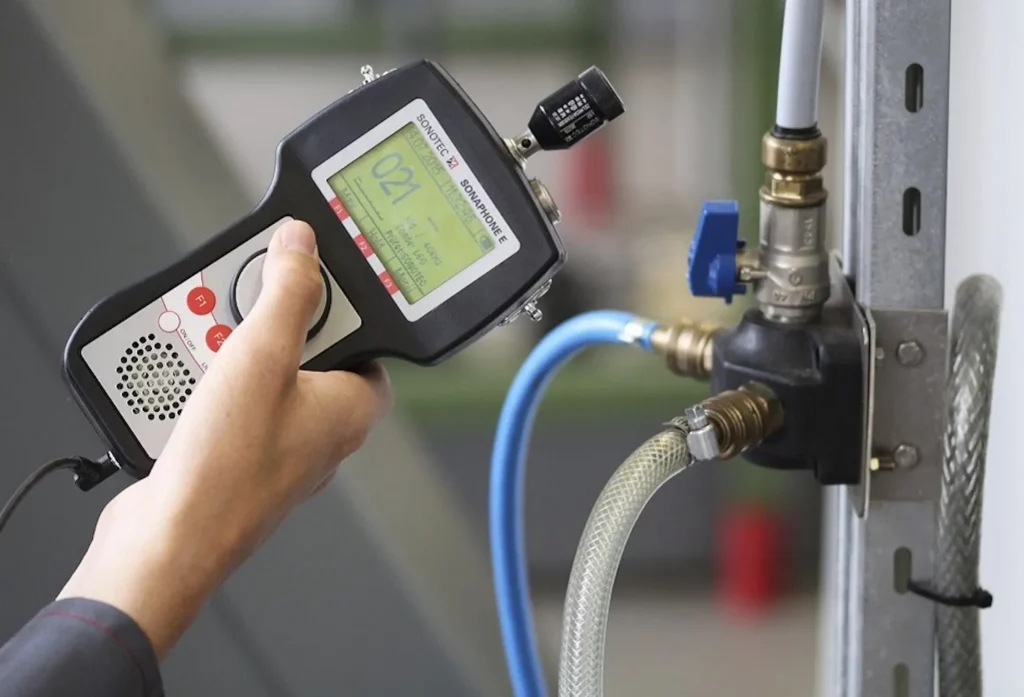
Copper and plastic pipework fail in very different ways, and they hide leaks in very different ways too. Here is an honest comparison of how each one leaks, why single-method detection often misses plastic-pipe leaks, and what that means when you choose a firm in London.
If you have a leak somewhere behind a wall, under a floor or beneath a screed, the material your pipes are made from matters more than most people expect. Copper and plastic do not just look different. They fail differently, they leak differently, and crucially, they give up their secrets to different detection methods. A survey approach that reliably pinpoints a copper pinhole can walk straight past a plastic push-fit leak, and the reverse is true as well.
This article compares the two honestly. We look at how copper actually fails, how plastic actually fails, why acoustic listening equipment struggles on plastic pipe, and why the mix of materials in your particular London home changes the odds. If you are weighing up who to call, the single most useful thing you can take away is this: the material dictates the method, so a firm that only owns one method is gambling with your floor.
Why the pipe material changes everything
Leak detection is really the art of making an invisible problem visible without demolishing the building to find it. Every method depends on the leak producing a signal we can read from the surface. Copper and plastic produce different signals, at different strengths, in different places, so the tool that works brilliantly on one can be nearly useless on the other.
Copper is rigid and it rings. When pressurised water escapes from a fault in a copper pipe, the metal carries the noise of that escape a long way along its own length, which is exactly what listening equipment is designed to exploit. Plastic is soft, flexible and damping. It absorbs vibration rather than carrying it, so the same size of leak in a plastic pipe produces a far quieter, far more localised sound that fades within a short distance. That single physical difference sits underneath almost everything else in this article.
How copper pipe fails and leaks
Copper has been the default for hot and cold supply and central heating in British homes for decades, so most established London properties have a great deal of it. It is durable, but it is not immortal, and it fails in a few recognisable ways.
Pinhole corrosion
The classic copper failure is the pinhole. Over years, corrosion works from the inside out or the outside in until a tiny perforation opens in the pipe wall. Pinholes are notorious because the visible symptom is often nowhere near the actual hole. Water tracks along the pipe, along a joist or across a membrane and emerges as a damp patch several metres away. Common contributors include aggressive water chemistry, stray electrical currents, poor initial installation, and flux left on the pipe after soldering slowly eating through the wall.
Joint and solder failures
Soldered and compression joints are the other weak points. A dry joint that was never fully sound can weep for years before it becomes obvious. Compression fittings can loosen with thermal movement and vibration. Where copper meets a fitting, you also get the possibility of corrosion concentrating at the junction.
Physical and thermal stress
Copper suffers where it has been kinked during installation, where it rubs against masonry as it heats and cools, or where it has been nicked by a nail or screw. Freeze damage can split a run cleanly. Because copper conducts heat so well, a hot leak also tends to warm the surrounding fabric, which becomes useful later when we talk about thermal imaging.
How plastic pipe fails and leaks
Plastic pipework, including push-fit systems and flexible barrier pipe, has become the standard for much modern installation and for a great deal of remedial work. It is quick to fit, tolerant of freezing, and immune to the internal corrosion that plagues copper. But it has its own catalogue of failures, and they are less widely understood.
Push-fit and O-ring failures
Push-fit joints rely on a rubber O-ring and a gripping collar to seal the pipe. When they are inserted fully, cut squarely and deburred, they are reliable. When they are not, they leak. An under-inserted pipe, a scratched pipe end, a twisted or displaced O-ring, or grit on the seal all produce slow weeps that can take months to show. Because these joints are often hidden inside walls, under units or beneath floors, the fault sits out of sight from day one.
Poorly made and unsupported joints
Plastic is forgiving to install, which is precisely why it gets installed badly. Insert depth not marked, pipe not clipped and supported so it drags on the joint, mixing of incompatible fittings between brands, and inserts left out of flexible pipe are all common. None of these announce themselves immediately. They tend to surface as intermittent damp that worsens as the joint relaxes.
UV, heat and chemical degradation
Plastic degrades in ways copper does not. Prolonged exposure to sunlight can make some plastics brittle, which matters where pipe runs across a loft near rooflights or along an exterior. Excess heat, such as pipe run too close to a flue or a poorly commissioned boiler, can soften or distort it. Over long periods, some older plastic materials become brittle and crack under normal pressure cycling. Rodents also chew plastic, which copper resists.
The quiet-leak problem
The defining feature of plastic-pipe leaks, from a detection point of view, is that they are quiet. The material damps the escaping-water noise, and flexible pipe often runs in curves rather than straight lines, so there is no rigid metal path to carry sound. A plastic leak can be soaking a floor while producing almost nothing for a microphone to hear.
So which one leaks more?
This is the question everyone asks, and the honest answer is that it depends on age, installation quality and water conditions rather than on the material being inherently good or bad. Copper installed decades ago in an area with aggressive water will throw pinholes. Plastic installed quickly and carelessly will throw joint leaks. Neither material fails often when it is installed well and left alone.
What we can say fairly is this. Copper failures are more often about the pipe itself ageing and corroding, so they tend to appear later in a system's life and can be widespread once they start. Plastic failures are more often about the joint and the installation, so they tend to appear at connection points and are frequently traceable to how the work was done. In terms of raw frequency across a mixed housing stock, there is no reliable public figure we would stand behind, and you should treat any firm quoting a precise percentage with caution. The useful takeaway is not which leaks more, but that they leak in different places for different reasons, and therefore need different detection.
Why detection differs by material
Here is where the practical difference bites. Acoustic leak detection, using ground microphones and correlators, is the workhorse method for pressurised metal pipe. It listens for the sound of water forcing its way out under pressure and, on copper, that sound travels well enough to pinpoint the fault with real precision. On plastic, the same equipment is fighting physics. The sound is quieter at source, it dies away quickly, and there is no ringing metal to carry it. A skilled operator can still get results on plastic acoustically in the right conditions, but it is far less dependable, and on flexible plastic it often fails outright.
That is why, on plastic, the emphasis shifts to methods that do not rely on the pipe carrying sound:
- Tracer gas. A safe hydrogen and nitrogen mix is introduced into the drained pipe. The small gas molecules escape through the exact point of the leak and rise to the surface, where a sensitive probe detects them. Because it follows the leak path rather than listening for noise, tracer gas works on plastic just as well as on copper, and it is often the deciding method on quiet plastic leaks. You can read more on our tracer gas leak detection in London page.
- Thermal imaging. A thermal camera reads surface temperature differences. A hot-water leak warms the surrounding floor or wall, and a cold-supply leak can cool it, and both show up as a pattern the camera can see through finishes. This works regardless of pipe material because it reads the effect of the water, not the pipe.
- Moisture mapping. Meters and hygrometers map where moisture has spread, which narrows the search area before the more precise tools go to work. Again, material-agnostic.
For a fuller walk-through of each technique and when it is used, see how leak detection works, methods explained. And if your specific concern is copper, we have a dedicated guide on how to find a leak in a copper pipe.
Material, failure and best detection method at a glance
| Pipe material | How it typically fails | Best-fit detection method |
|---|---|---|
| Copper (supply and heating) | Pinhole corrosion, dry or weeping soldered joints, freeze splits, nail and screw damage | Acoustic listening and correlation first, backed by thermal imaging on hot runs |
| Plastic push-fit | O-ring seal failure, under-insertion, grit or scratches on the pipe end | Tracer gas as the lead method, with moisture mapping to narrow the area |
| Flexible barrier pipe | Unsupported joints, missing inserts, kinks, degradation over time | Tracer gas and thermal imaging; acoustic is unreliable on flexible runs |
| Mixed copper-to-plastic transitions | Failure at the fitting where the two materials meet, thermal movement | Combined survey: acoustic on the metal side, tracer gas across the joint |
| Any material, hidden hot-water leak | Water tracking away from the true source | Thermal imaging to find the warm zone, then tracer gas to pinpoint |
What the forums actually say
If you spend time in DIY and trade communities such as r/DIYUK on Reddit or the DIYnot forums, a fairly consistent picture emerges, and it lines up with what we see on site. The general consensus among experienced posters is that push-fit plastic gets a lot of unfair blame for leaks that were really caused by rushed installation rather than the fittings themselves, and that a properly inserted, properly supported push-fit joint is reliable. The recurring warnings are about insertion depth, cutting the pipe squarely, using pipe inserts in flexible pipe, and not mixing brands of fitting.
On copper, the common thread is that pinholes tend to cluster in certain properties and water areas, and that the visible damp is frequently a long way from the actual hole, which is exactly why people end up calling for detection rather than guessing. There is also a widely shared frustration that a leak was chased with one tool, a hole was cut in the wrong place, and the leak turned out to be elsewhere. That frustration is the single best argument for a multi-method survey, and it comes from real homeowners, not from us.
We deliberately are not quoting specific usernames, figures or anecdotes as if they were data. The point is the direction of the consensus: installation quality drives plastic leaks, corrosion and age drive copper leaks, and one detection method rarely fits both.
Older versus newer London homes
London housing stock is unusually varied, and the material mix in your home is a strong clue to what you are dealing with.
Older properties, the Victorian and Edwardian terraces and the interwar semis that fill so much of the capital, are typically full of copper, and often copper that has been added to and altered many times over. In these homes, corrosion pinholes and ageing soldered joints are the leading suspects, and acoustic detection tends to earn its keep. You will also find lead in the very oldest supply pipes and iron in some heating systems, which brings its own considerations.
Newer builds, conversions and recently refurbished flats are far more likely to run plastic push-fit and flexible pipe, particularly where speed of installation mattered. Here the odds shift towards joint and installation failures, and towards the quiet leaks that acoustic equipment struggles with. Many London homes are in fact hybrids: an old copper system that has been repaired or extended in plastic, so a transition fitting sits buried in a wall as a natural weak point. That hybrid reality is the strongest single reason to insist on a survey that can handle both materials in one visit.
What this means when choosing a firm
The practical conclusion of all this is simple. A firm that only listens acoustically is well equipped for copper and poorly equipped for plastic. Given how much plastic is now in London homes, and how many homes mix the two, a single-method operator will sooner or later be asked to find a leak their kit cannot hear, and the temptation then is to guess and cut. That is how people end up with an unnecessary hole and an unfound leak.
When you are choosing, ask a few direct questions. Do you carry tracer gas as well as acoustic equipment? Do you use thermal imaging and moisture mapping? What happens if the first method does not locate it? A firm confident across methods will answer those easily, because covering both materials is the whole point of their kit.
How we approach it
Our leak detection in London service is built around a multi-method survey precisely so the material never dictates whether we can help. We start non-invasively, read the building with the right combination of acoustic, tracer gas, thermal and moisture equipment, and let the evidence point to the fault rather than forcing one tool to do a job it is not suited to. On copper we lean on acoustic and thermal; on plastic we lean on tracer gas and moisture mapping; on the hybrids that are so common here we use whatever the joint demands.
Our commercial approach is meant to remove the risk from your side. We work on a no find, no fee basis, so if we cannot locate your leak you do not pay for the detection. The hourly rate is fixed at the point of booking, so you know the rate before we arrive and it does not move once we are on site. For a sense of scale only, professional leak detection in the UK trade cost guides typically ranges from around 200 to 500 pounds for a residential survey, depending on access, the size of the property and how many methods the job needs, and any figure you are quoted should be confirmed as fixed before work begins rather than left open.
The bottom line
Copper and plastic are not simply better or worse than one another. They fail in different places, for different reasons, and they hide their leaks from different tools. Copper tends to corrode and to carry the sound of its own leaks, which suits acoustic detection. Plastic tends to fail at joints and to swallow the sound, which is why tracer gas, thermal imaging and moisture mapping matter so much more. Most London homes contain both, often joined together, so the only approach that reliably covers you is a survey that carries every method and chooses the right one for the pipe in front of it. That is the difference between finding your leak on the first visit and cutting a hole in the wrong wall.
Frequently asked questions
Does plastic pipe really leak less than copper?
Not straightforwardly. Plastic does not suffer the internal corrosion that causes copper pinholes, but it fails at joints when it is installed badly, and it can degrade under heat or UV over time. Whether plastic or copper leaks more in a given home comes down to age, water conditions and installation quality rather than the material alone. We would be cautious of anyone quoting a precise percentage for either.
Why can't acoustic leak detection find leaks in plastic pipe reliably?
Acoustic detection listens for the sound of water escaping under pressure, and that method depends on the pipe carrying the noise. Copper is rigid and rings, so it carries the sound well. Plastic is soft and flexible, so it damps the sound and it fades within a short distance, especially on curved flexible pipe. That is why tracer gas, thermal imaging and moisture mapping usually take the lead on plastic.
What method finds a leak in plastic push-fit pipe?
Tracer gas is usually the deciding method. A safe hydrogen and nitrogen mix is put into the drained pipe, and the small molecules escape at the exact leak point and rise to a sensitive surface probe. It follows the leak path rather than listening for noise, so it works on plastic just as well as copper. Moisture mapping and thermal imaging are used alongside it to narrow the search area first.
My London home has both copper and plastic pipes. Does that cause problems?
It is very common, and the transition fittings where copper meets plastic are natural weak points because of thermal movement and the mix of materials. The important thing is to use a firm that can survey both materials in one visit, using acoustic detection on the copper side and tracer gas across the plastic and the joints, rather than one that only carries a single method.
How much does professional leak detection cost?
As a rough guide only, UK trade cost guides typically put a residential leak-detection survey in the region of 200 to 500 pounds, depending on access, property size and how many methods the job needs. We fix the hourly rate at the point of booking so you know the rate before we arrive, and we work on a no find, no fee basis, so if we cannot locate your leak you do not pay for the detection.
Why does the damp patch appear so far from the actual leak?
Water follows the path of least resistance. Once it escapes, it tracks along the pipe, along a joist, or across a membrane before it emerges as a visible stain, so the damp you can see is often metres from the true fault. This is common with copper pinholes in particular and is exactly why cutting into the wall at the wet spot so often misses the leak. Proper detection finds the source, not just the symptom.